






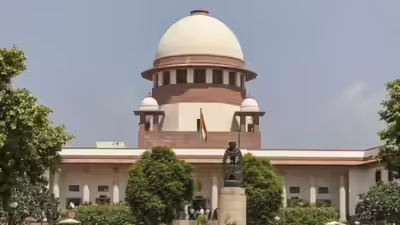
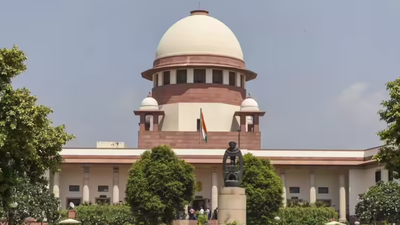
NEW DELHI: Dealing with the sensitive issue of ‘faith vs fundamental rights’ emanating from quashing of a Sabarimala Ayyappa temple custom barring the entry of women in the 10-50 age group, a nine-judge SC bench on Wednesday said it would not revisit SC’s three-decade-old ruling of “Hinduism is a way of life”.As counsel after counsel questioned various religious practices in several denominations under the umbrella of Hinduism and favoured identification of its essential religious practices that alone could get protection under the Constitution, the bench of CJI Surya Kant and Justices B V Nagarathna, M M Sundresh, Ahsanuddin Amanullah, Aravind Kumar, A G Masih, P B Varale, R Mahadevan and J Bagchi said the court should not be the forum to determine what is an ideal religious practice.Justice Nagarathna said, “As far as Hinduism is concerned, the court had long back settled that it is a way of life. We need not reiterate it nor revisit it.”This story continues on page 12 in the newspaper. For your reading convenience we have added it below.Court should carve out space for dissenters: Senior advocateThis remark came when senior advocate G Mohan Gopal said the court was interpreting the interplay of Article 25, which gave individuals the right of freedom of conscience and right to freedom of religion, and Article 26, which conferred the right to religion on a denomination.Gopal said the court should carve out space for dissenters within the denominations to enable reforms in the practices, which is stifled at present. The bench disagreed with him and Justice Nagarathna said, “Whether a person goes to a temple or not for worship is neither a qualification of disqualification in Hinduism.”CJI Kant said, “Hindusim is flexible and accommodates myriad ways of worship without forcing anyone to go to a temple. A person who goes to a temple is as much a Hindu as the person who quietly lights a lamp in his small hut with a silent prayer.” He said SC is not a super-spiritual leader to interpret religious practices, reform of which is primarily in the hand of the legislature.The “Hinduism is a way of life” ruling by a three-judge bench came on a petition challenging a Bombay HC judgment that had quashed the election of Shiv Sena candidate Ramesh Yeshwant Prabhoo on the ground that party supremo Bal Thackeray, while campaigning for the candidate, had appealed for votes in the name of religion.Upholding the disqualification, the bench led by Justice J S Verma had said, “Thus, it cannot be doubted, particularly in view of the constitution bench decisions of this court, that the words ‘Hinduism’ or ‘Hindutva’ are not necessarily to be understood and construed narrowly, confined only to the strict Hindu religious practices unrelated to the culture and ethos of the people of India, depicting the way of life of the Indian people.”Gopal argued faith in God should not be replaced with faith in clergy, which is increasingly taking place and referred to Ambedkar’s proposal on religious rights in Aug 1947 before the Constituent Assembly to suggest that the right to convert should be elevated as a fundamental right. Solicitor general Tushar Mehta objected and said this proposal was rejected after a debate in the Constituent Assembly. Senior advocate C S Vaidyanathan said, “While courts may be entitled to interpret the law in such a manner that the rights existing in the blueprint (Constitution) have expansive connotations, the court cannot impose additional restrictions by using tools of interpretation.”He advocated a nuanced approach to maintain the identity and purpose of individual and denominational religious rights.