








While most of us are cramming in holiday plans and pretending not to see the mountain of stuff that has taken over the living room, Japanese households are quietly doing something brilliant every December: Ōsōji. It’s a centuries-old ritual of cleaning the home out before the new year begins, roughly translated as big cleaning. Not a frantic scrub because the guests are coming; a purposeful, almost meditative reset, sweep out the old year, make way for the new.To be honest? It’s tough to argue with the science behind it.Your home is messing with your head more than you realiseWe’ve all been there, that little bit of anxiety that comes with walking into a room that is just too much. Dishes, laundry, mail that hasn’t been opened, that corner you’ve been meaning to get to since spring, it turns out that it’s not all in your head.A study published in Behavioural Sciences found that the clutter in a person’s home is directly related to lower psychological comfort and weaker subjective well-being. Living in a cluttered environment every day can slowly chip away at your well-being. It adds up quickly, especially for millennials, since many of us are working from home, living in smaller places, and navigating a lot.A structured declutter is really a reset button for those people who struggle to be organised. More often than not, the difference between a clean that sticks and one that falls apart by February comes down to one thing: having a plan. The defined steps, the defined endpoint, the category-by-category approach, all of it makes it feel less like a battle and more like something you can actually get done.Why cleaning feels like hitting a reset buttonCleaning is not just an emotional gesture; it does have a measurable effect on stress.According to a study published in Social Psychological and Personality Science, cleaning can help to reduce psychological and physiological responses to stress. It is not only your mood that feels the difference. It is probably a combination of things: physical activity, the sense of making visible progress, and getting back control of your environment. When the world is a to-do list, crossing off a single item can break the spiral.Ōsōji is basically all of that in one purposeful event, and not the random Tuesday afternoon panic cleaning before your roommate gets home. It is a prescribed rite, with a beginning, middle and end, and that structure is part of what makes it work.

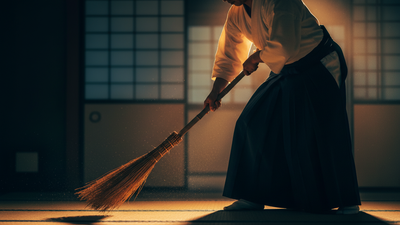
The Japanese year-end cleaning ritual that’s more than just tidying up.Image Credits: Google Gemini
The emotional weight of getting rid of stuffDecluttering is easy until you find a box of things that once meant something. When you are in cluttered spaces, your emotional reactivity increases, making it more difficult to deal with the mess itself. It explains why sometimes you start cleaning and, halfway through, you feel worse.That’s why the Ōsōji way, methodical, categorical, no pressure to do it all at once, is more realistic than a dramatic purge. You just need to take small daily steps.A cleaner home is also a safer oneSo, apart from the mental health angle, there is also a simple public health concern. Cleaning and disinfecting surfaces are important ways to reduce exposure to pathogens in the home. Cleaning out the closet at the end of the year is emotionally satisfying, but it is also a chance to get rid of the dirt that builds up in corners, on surfaces, and in places we don’t always notice.A home that is easier to navigate, less cluttered and more organised is a home where normal routines like sleep, meals, and just existing feel peaceful.How to actually do itVague ambition doesn’t work. “I’m going to clean the whole apartment this weekend” is a phrase that rarely survives reality.Ōsōji is seasonal, organised and limited in scope. Begin with one room or one type of item. Make three piles: toss, donate, keep. Then wipe and sweep and wash. That’s it. You’re not trying to create a Pinterest-worthy home; you’re just trying to make a space that feels a little more like you again as you head into the new year.Happiness is not a clean house, but mess is a stressor, cleaning is a stress reliever, and structure helps them follow through. So, see the ritual for what it is: not a marathon of chores, not a self-improvement project, just an annual chance to make a little more room for your things, and perhaps for your headspace too.