







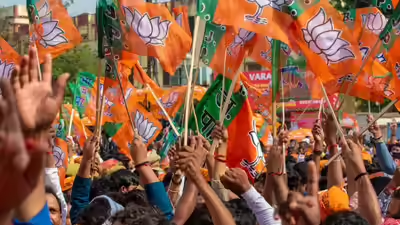

In a dramatic twist to India’s political landscape, West Bengal has begun its tryst with the Bharatiya Janata Party (BJP), marking a seismic shift from decades of regional dominance by the Trinamool Congress.Meanwhile, Tamil Nadu witnessed a major upheaval as new entrant TVK won over 100 seats, reshaping southern politics, while Kerala’s Congress-led United Democratic Front (UDF) staged a triumphant return to power.
Assam and Puducherry, meanwhile, remained steadfast with the National Democratic Alliance (NDA).With the latest elections results, India’s political map has changed drastically.The BJP now directly governs 17 states (West Bengal, Delhi, Haryana, Madhya Pradesh, Rajasthan, Gujarat, Uttar Pradesh, Maharashtra, Assam, Odisha, Chhattisgarh, Tripura, Goa, Arunachal Pradesh, Manipur, and Uttarakhand). The NDA (BJP + allies) raises the tally to 22 states, with allies such as TDP‑led Andhra Pradesh, JD(U)‑led Bihar, and regional partners in states like Meghalaya, Sikkim and Nagaland.The Congress too improved its tally this time around and now directly controls four states (Kerala, Himachal Pradesh, Telangana, and Karnataka) with the INDIA bloc adding two more (Jharkhand and Jammu & Kashmir) to the tally.
In numbers
The NDA now has a government in 22 states, which account for nearly 73% of India’s total area. Around 110 crore people or 78% of India’s populatioin live in these states.The Congress and INDIA bloc meanwhile have a government in six states, which account for around 18% of India’s total area. Around 19 crore people or roughly 14% of India’s population live in these states.