








Oracle did not build the data centre in Abilene, Texas. It leased it from Crusoe—a relatively inexperienced operator—on a 15-year contract worth more than a billion dollars a year. This is not an exception to how Oracle operates; it is the whole model. Oracle is a database company that has recast itself as the financial guarantor of an AI infrastructure buildout it neither constructs nor controls, underwritten almost entirely by debt, for a partner in OpenAI that has promised $1.4 trillion across its contracts and is not yet profitable.Of the $553 billion in remaining performance obligations Oracle reported in its most recent earnings, more than $300 billion is a single customer: a company whose CFO has reportedly told colleagues she isn’t sure it can pay for future computing contracts if revenue doesn’t grow fast enough. That is the arrangement. That is what Oracle wants you to feel good about.And yet the posts keep coming. In the past two weeks alone, Oracle has declared its data centres moving forward on time, cited vertical development milestones in Michigan, pointed to 200MW of operational capacity in Abilene as proof of momentum, and described itself as “incredibly excited” about a partnership that has erased roughly half its stock value since the deal was announced.None of it mentions the 10,000 employees already laid off, or the analysts estimating the final toll could reach 30,000. None of it mentions the lenders who refused to finance Abilene’s expansion, or the bonds trading at junk levels, or the $100 billion debt load being serviced by a workforce that is visibly shrinking. Oracle keeps posting. The stock keeps falling. At some point—and that point may already have passed—the reassurances stop being communications and start being evidence.
Oracle’s stock has lost half its value since the OpenAI deal looked like a sure thing
Here’s the backstory. In July 2025, Oracle and OpenAI locked in what may be the largest cloud computing deal in history—OpenAI committed to spending $300 billion on Oracle’s infrastructure over roughly five years, starting in 2027. In exchange, Oracle agreed to build out 4.5 gigawatts of AI data centre capacity across the US.Wall Street initially loved it. Oracle’s stock surged 43% in a single day when the scale of the deal became clear in September 2025, briefly making Larry Ellison the richest person on Earth.
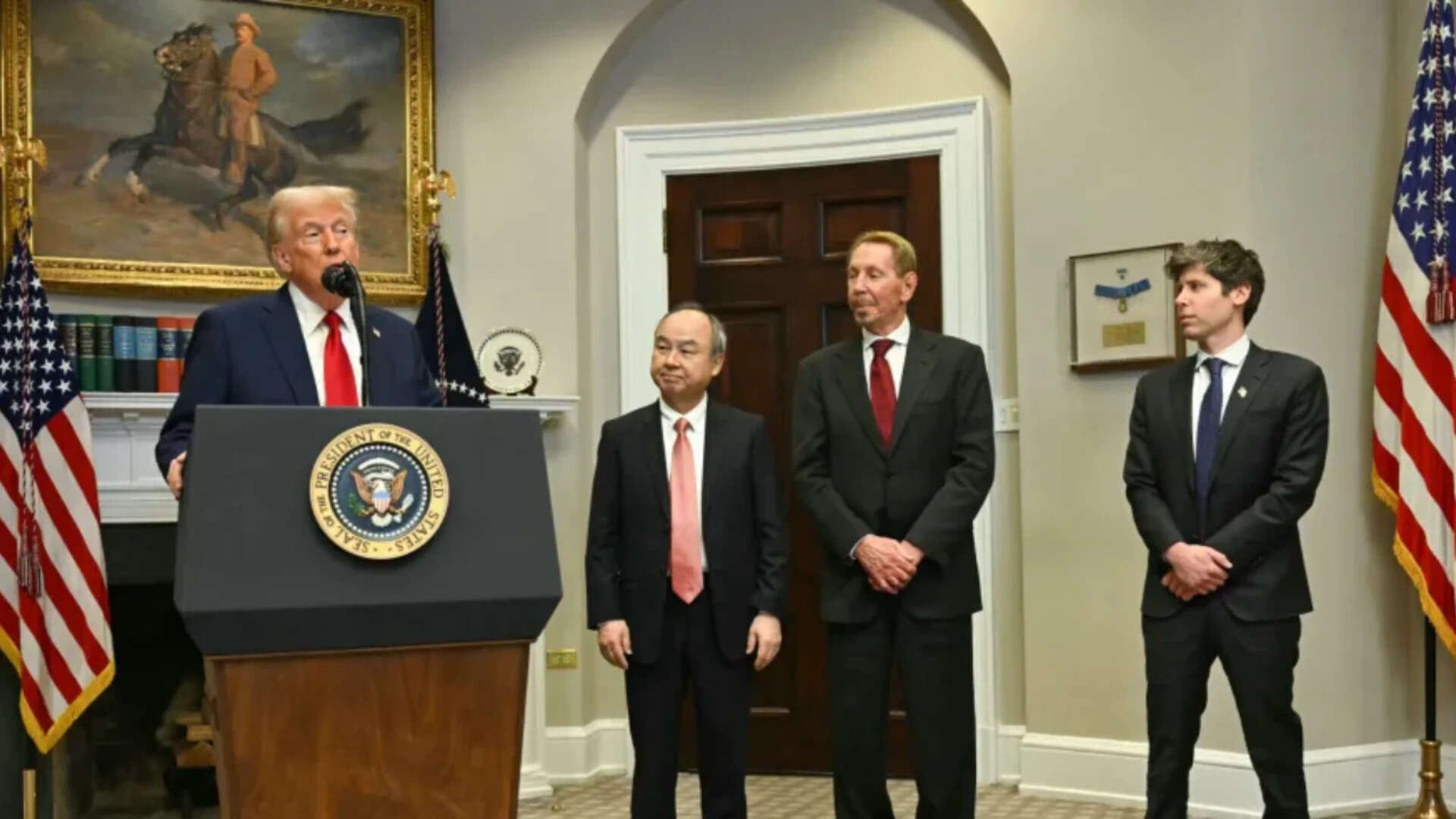
Then the math caught up. Since the deal was formalised, Oracle took on $58 billion in new debt in just two months—$38 billion for campuses in Texas and Wisconsin, another $20 billion for a site in New Mexico. Total debt now exceeds $100 billion. S&P Global has placed Oracle’s BBB credit rating on negative watch, and some of its bonds have been trading at levels associated with junk debt. The stock has shed roughly half its value from that September peak.What makes Oracle’s position uniquely precarious is that it isn’t actually building these data centres itself. Unlike Google or Meta, Oracle leases facilities that other companies construct on its behalf—in Abilene, that’s Crusoe, a relatively inexperienced operator locked into a 15-year arrangement worth more than a billion dollars a year.Oracle, in other words, is taking on the financial risk of a hyperscaler without the operational infrastructure of one. Amazon, Google, and Microsoft are funding comparable buildouts from operating cash. Oracle is doing it almost entirely on credit, with capital expenditure now running at $48 billion annually and the company carrying negative free cash flow.
The Abilene expansion collapsed—and Oracle’s attempts at damage control keep backfiring
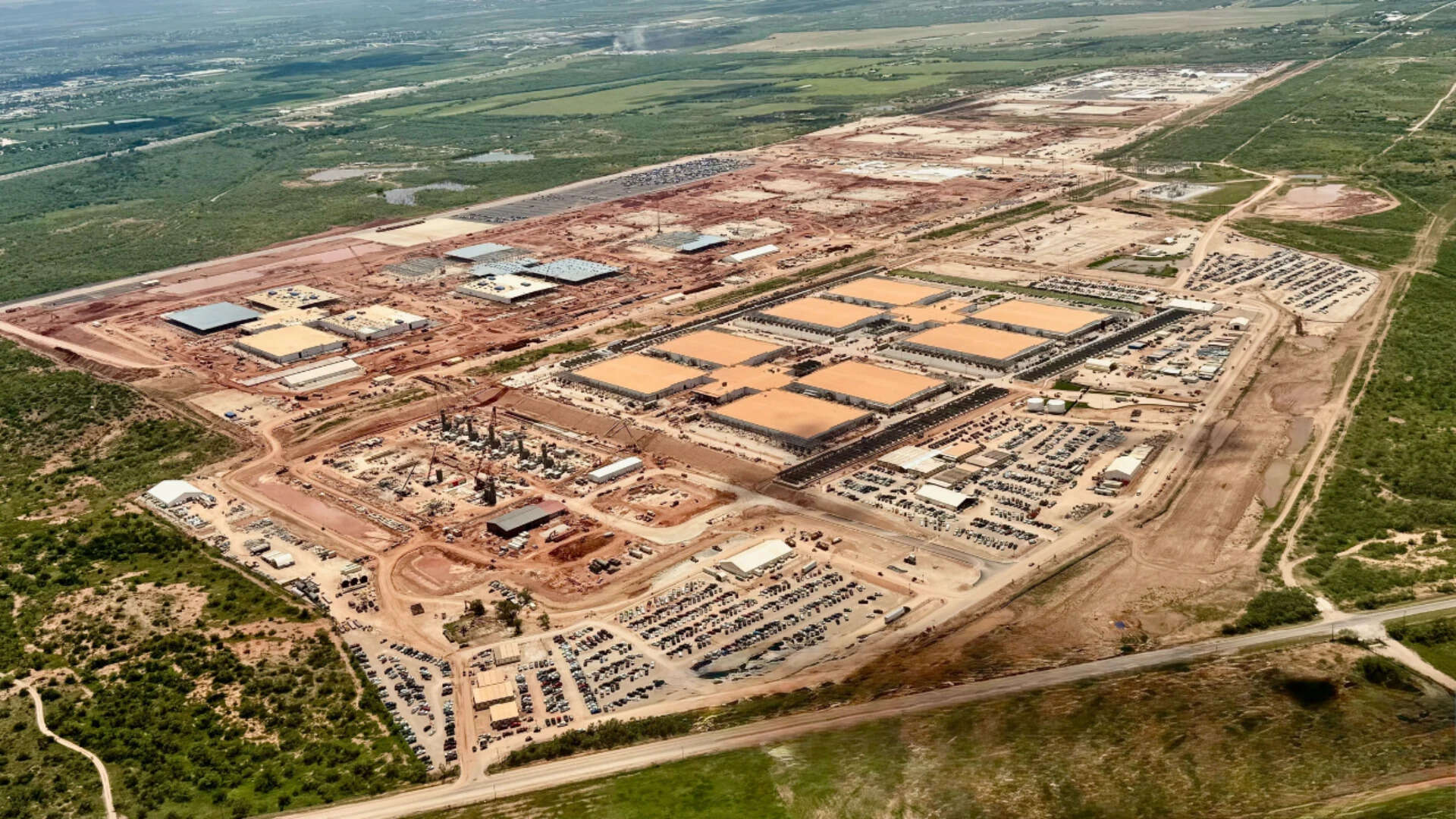
The clearest sign that something’s off: OpenAI is no longer planning to expand its partnership with Oracle in Abilene, Texas—home to the flagship Stargate data centre—because it wants clusters with newer generations of Nvidia GPUs. The current Abilene site is built around Nvidia’s Blackwell processors, and power isn’t projected to come online for another year. By then, OpenAI wants access to something faster.Oracle had already secured the site, ordered the hardware, and spent billions on construction and staff, with the expectation of going bigger. That investment is now sitting in a facility OpenAI doesn’t plan to grow.Oracle’s communications around this have made things worse, not better. A post on X in early February insisting the stalled Nvidia-OpenAI deal had “zero impact” on its financial relationship with OpenAI sent shares sliding nearly 3%. Venture capitalist Alex Kolicich described it as “literally bank-run language.” Oracle has since pointed to Abilene’s 200MW of already-operational capacity as evidence the partnership is solid, and cited vertical development now underway in Michigan as proof of broader momentum.The specificity—naming Michigan, New Mexico, Texas, and Wisconsin individually, citing the 8-building Abilene campus as on schedule—marks an escalation in Oracle’s PR posture. But the framing sits awkwardly against the known facts. On-schedule construction and OpenAI choosing not to expand there are not mutually exclusive. It also wasn’t just OpenAI that walked away from Abilene—lenders declined to finance an expansion with Oracle as the tenant. Banks have grown wary of Oracle debt as private credit investors have grown anxious about their exposure.What’s more, the Financial Times has reported that OpenAI has in practice abandoned the Stargate joint venture altogether, preferring instead to lease compute capacity from third parties rather than own infrastructure directly—with one person involved describing the company as having “sidelined first-party data centres.” OpenAI itself now calls Stargate merely “an umbrella for our compute strategy.”Partners who spent months negotiating ownership structures and signing construction contracts have been left, in the words of one person familiar with the situation, “feeling let down and misled.” Oracle’s statements don’t address any of that. They just say construction is proceeding as planned, that OpenAI’s latest models—including, Oracle noted, the new 5.5 model—represent a significant step forward. None of that explains why the expansion collapsed, or who absorbs the cost of the infrastructure that was built in anticipation of it.
Thousands of Oracle employees are now paying the price for a bet their company made on OpenAI
Oracle is laying off thousands of employees across divisions worldwide—at least 10,000 gone so far, with analysts at TD Cowen estimating the final number could climb to 20,000 to 30,000. That would be roughly 18% of Oracle’s 162,000-strong global workforce, and the company’s largest restructuring ever.TD Cowen estimates the cuts could free up $8 to $10 billion in cash flow—cash Oracle badly needs. And the pressure is only growing: of the $553 billion in remaining performance obligations Oracle reported in its most recent earnings, more than $300 billion is OpenAI—a company that has promised $1.4 trillion across its contracts and is burning through cash faster than projected.Oracle’s fate is now almost entirely tied to whether Sam Altman can turn OpenAI into a profitable business before the debt comes due. Its CFO has reportedly told colleagues she worries the company may not be able to pay for future computing contracts if revenue doesn’t grow fast enough. That is not a partner. That is a liability.None of Oracle’s recent statements mention any of that. They say construction is on plan, that the partnership is exciting, and that OpenAI’s models keep getting better—and that Oracle is “seeing firsthand” how quickly adoption of that technology is growing. Given that every prior reassurance has moved the stock in the wrong direction, investors could be forgiven for reading the latest ones the same way.