







Optical illusions aren’t just fun tricks for social media—they’re quiet windows into how our brains work. When you stare at a clever image, your mind doesn’t just see shapes and shadows; it reacts, focuses, and filters them through your own patterns, habits, and emotions. That’s why psychologists and curious learners alike use optical illusions as gentle tools to uncover hidden personality traits you might not even realise you have.These personality‑style tests usually pack several elements into one picture and ask: What do you see first? Your brain’s instinctive choice isn’t random—it often reflects how you tend to respond to life, people, and problems.Ready to discover a little more about yourself?Try this simple optical illusion personality test and see how your mind plays tricks on you—and what that might say about who you really are.
How This Optical Illusion Test Works
Images like this are popular online because they’re quick, interactive, and deeply curious. One glance, and suddenly you’re pulled into a little mental game. Behind the fun, though, there’s real psychology at play—ideas like cognitive bias (the way your brain shortcuts information) and perception (how your brain interprets what your eyes see).When you combine an optical illusion with a personality test, you get a lighter, more engaging way to explore your inner tendencies.These tests won’t replace a full psychological evaluation, but they can help you notice patterns—like whether you lean more toward emotion or logic, intuition or analysis.The key is your first instinct. Researchers have long noted that our brains often fixate on the part of an image that feels most familiar or important to us. So, take a breath, look at the picture, and let your eyes land naturally. Don’t overthink it.Now, quietly ask yourself: What did I see first?
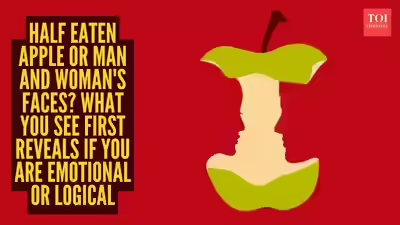
What You See First: The Half‑Eaten Apple
If the first thing your eyes grabbed was the half‑eaten apple, then your mind is tuned into warmth, connection, and feeling. You’re likely a deeply social and emotionally driven person. You notice moods, tone shifts, and unspoken struggles in the people around you, and you’re often the one who offers comfort when someone is hurting.Being very emotionally sensitive doesn’t mean you’re weak or unstable.Instead it grounds you. You notice subtle cues others miss like body language, pauses and tone. You tend to quickly and intuitively grasp how groups work. You’re the one who eases tension, reads the room and makes others feel seen without saying much. But feeling so much for others can also be emotionally tiring. So learn to protect your emotional energy, just like you care for others.
What you see first: The faces of a man and a woman
If you saw the faces of a man and a woman first, then you are logical in nature. You question why things happen instead of just reacting to how they feel. You don’t rush headlong into decisions. Instead, you pause, think, and then move with intention. You’re often more rational than others. You cut through emotion and looks at facts. Being logical and analytical helps you make careful, thoughtful choices in life. But this can also exhaust you mentally.Sifting through every detail, every possible outcome, every “what‑if” can leave your mind feeling overloaded.Learning to balance your logic with moments of emotional openness—letting yourself feel without analysing—is a powerful way to grow. You don’t have to lose your rationality to become more human; you can simply let your heart speak louder sometimes.
So, are you emotional or logical?
This test doesn’t label you as “only emotional” or “only logical.” Most people sit somewhere on the spectrum, blending both styles as life demands.The magic is in becoming aware of your natural tendency—and then using that awareness to grow.If you lean emotional, you can honour your empathy while learning to protect your boundaries. If you lean logical, you can sharpen your reasoning while practising more emotional openness. Whichever you saw first, take it as a gentle nudge to reflect: How do I usually respond to people, decisions, and conflicts?The more you understand your inner patterns, the better you can navigate relationships, work, and self‑care. And that’s a kind of insight no illusion can truly hide.