





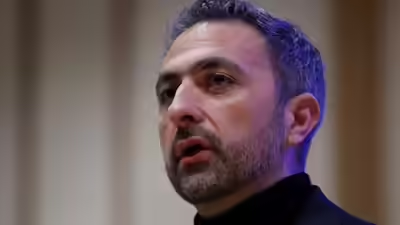
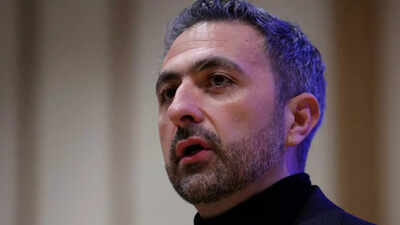
Microsoft AI CEO Mustafa Suleyman has said that the company still lacks the computing power needed to build systems at the largest scale. This comes even as the software giant continues to invest in expanding its capabilities and reducing reliance on external partners. “We are not able to build models in the very largest scale yet although our computation ramp is coming to enable us to do that later this year,” Suleyman told the Financial Times. “So we’re competing in the mid-class range,” he added, describing the position as “optimal” in balancing cost, performance, quality and large-scale usage. The remarks come as Microsoft unveiled a new speech transcription model as part of its broader push to strengthen its position in AI. The company is working to develop its own frontier models but continues to face constraints linked to data centre capacity, equipment shortages, power availability, and labour, which are affecting the pace of its internal AI development.
Microsoft AI CEO Mustafa Suleyman outlines roadmap for compute, self-sufficiency and model development
Microsoft AI CEO Mustafa Suleyman said the company is focusing on building long-term computing capacity and internal capabilities as it develops its own advanced AI systems and reduces reliance on partners.“The mission of our lab is to deliver AI self-sufficiency for Microsoft over the next two or three years. This means building the [chip] clusters that are frontier scale, investing in the data budgets, so that over the next few years we can get to the state of the art,” he noted.Suleyman was speaking to the FT from an off-site meeting in Miami for Microsoft’s Superintelligence team, where he and chief executive Satya Nadella addressed around 350 employees on the company’s long-term compute roadmap and objectives. The Google DeepMind co-founder joined Microsoft in 2024 to lead its consumer AI efforts and set up the team later that year amid contract renegotiations with OpenAI, which now allow both companies greater operational flexibility.Microsoft has been building its in-house AI stack, including its MAI-1 foundation model trained on Nvidia H100 GPUs, though it remains in preview. The company has also expanded hiring from rivals, including the addition of former Allen Institute chief Ali Farhadi. Suleyman said the team is working to lower the cost of AI tools. “We expect to see an enormous amount of demand,” he added.In another significant change to the management structure, Suleyman has been put in charge of AI model development, while Jacob Andreou, who formerly worked at Snapchat, has taken over Copilot-branded AI products.