








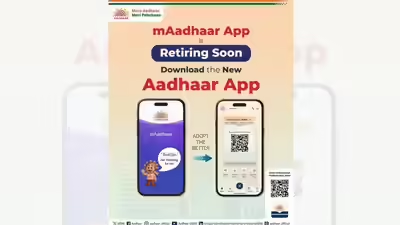

The mAadhaar app is being phased out as India’s identity ecosystem shifts toward a newer, more tightly controlled digital system. The Unique Identification Authority of India is replacing the older application with a redesigned Aadhaar platform that focuses heavily on selective data sharing and stronger authentication methods. The change is not cosmetic. It effectively replaces a widely used identity wallet and replaces it with a system that behaves quite differently in everyday use. As reported by Fortune India, the Unique Identification Authority of India (UIDAI) has extended the free online Aadhaar document update facility for an additional year, enabling users to update and verify their identity and address documents on the myAadhaar portal without any charges.As per an official memorandum issued by UIDAI, the free document update service will now be available until June 14, 2027. The facility was previously scheduled to remain free only until June 15, 2026.
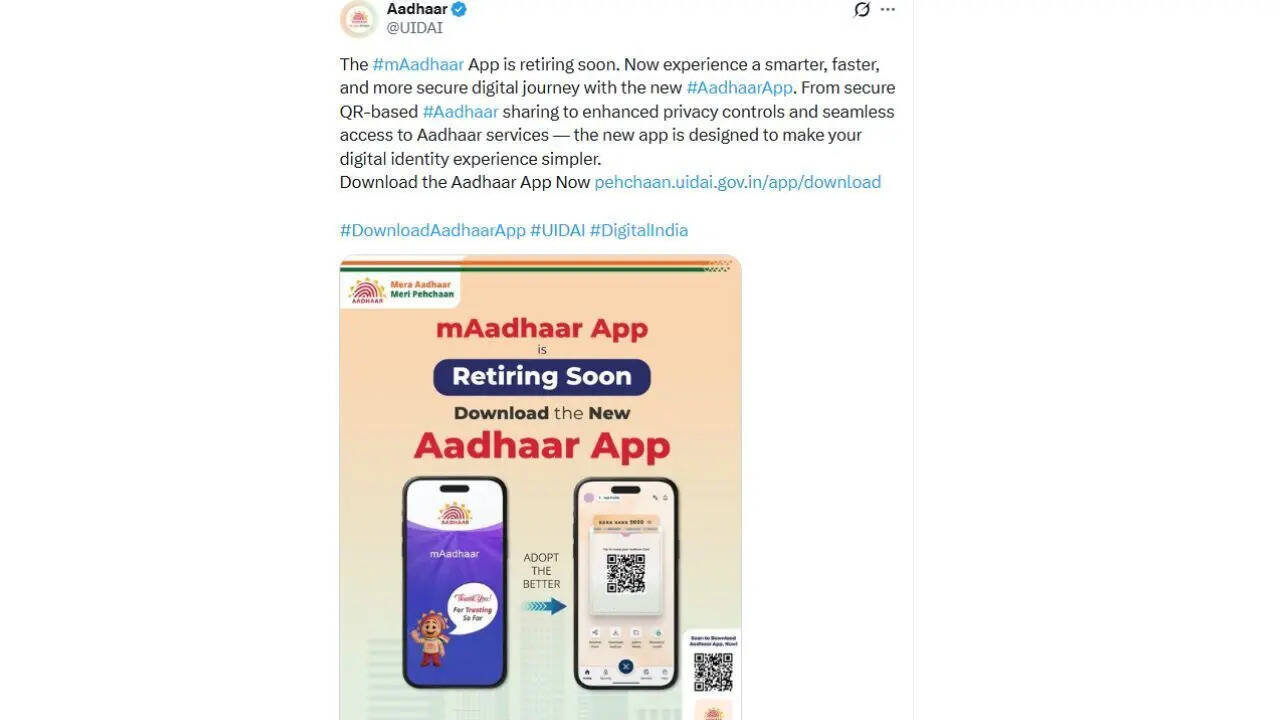
PC: X
How the new Aadhaar system replaces the old Aadhaar app
The new Aadhaar application is structured differently from the older setup, which often displayed full identity details during verification. The revised version narrows this down significantly.According to the X (formerly Twitter) post by an Aadhaar official, users can now move to the new AadhaarApp for a faster, more secure, and smarter digital experience with features like secure QR-based Aadhaar sharing.
How to set up the new mAadhaar app in simple steps
The onboarding process is more layered than the previous mAadhaar system. It requires sequential verification rather than a single login.Steps involved:
- Download the official “Aadhaar” app from verified app stores only
- Select the preferred language from the available options
- Enter the registered mobile number linked to Aadhaar
- Verify the OTP sent to that number
- Complete face authentication if prompted
- Set up a PIN or biometric unlock
- Add Aadhaar number and complete another OTP verification
Each step is designed to confirm identity at multiple stages rather than once.
New Aadhaar authentication system : Major upgrade in digital identity verification
Authentication has also been redesigned. The new system now introduces multiple layers instead of relying mainly on SMS-based OTP verification, The updates include:
- Face-based authentication
- QR code verification
- OTP still exists, but is no longer the only access method
The QR-based system is particularly aimed at reducing friction during in-person verification at counters, hotels, hospitals, and government services.
New Aadhaar app introduces security features
The app introduces more direct control over biometric and identity data, which was not previously available in the same form.Notable features include:
- Ability to lock fingerprint, face, and iris authentication data
- Control over when and how biometric verification is allowed
- Reduced risk of unauthorised identity use on shared devices