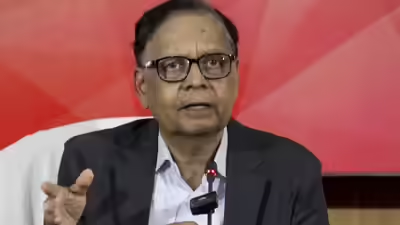







Pakistan could be forced to consider fuel rationing at petrol pumps if the ongoing US-Iran conflict continues for a prolonged period, finance minister Muhammad Aurangzeb has said.Speaking at the World Bank–IMF Spring Meetings 2026 in Washington, DC, Aurangzeb indicated that while Islamabad has so far avoided rationing, the situation remains fluid and dependent on how the conflict evolves.“So far we have stayed away from interventions at the gas stations and at the petrol pumps… from our perspective that’s a much better way to go than going into rationing,” he said, while responding to a question on whether Pakistan may impose fuel restrictions.
Govt prefers price mechanism over rationing
The minister explained that the government is currently relying on price adjustments and targeted subsidies to manage demand, rather than imposing strict supply controls.“What we’ve seen is it has led to law and order situations in other countries,” he said, referring to rationing measures elsewhere. “If demand destruction can be done through price transmission combined with targeted subsidies… that’s a much better way to go.”However, he cautioned that this approach may not hold if the crisis deepens. “I have to put an asterisk there, it all depends how long this goes and how far this goes,” he added, signalling that rationing remains a fallback option.
Oil crisis driven by Hormuz disruption
The warning comes amid heightened global energy volatility triggered by the US-Iran war, which has disrupted supplies through the Strait of Hormuz — a key route for nearly a third of global oil flows,.Pakistan, which imports around 85% of its fuel through the strait, is particularly vulnerable to supply shocks and rising prices. The country has already witnessed sharp fuel price hikes in recent weeks, sparking protests and forcing the government to roll back increases.
Rising prices, public pressure shape policy
Petrol prices in Pakistan surged by over 40% earlier this month before being partially reduced following public backlash. The spike pushed transport costs higher and triggered unrest in several regions.To cushion the impact, the government introduced targeted subsidies for transporters, farmers and other key groups, alongside relief measures such as free public transport in some areas.Aurangzeb’s remarks highlight the delicate balancing act facing Islamabad managing dwindling energy supplies while avoiding public unrest, as the Middle East conflict continues to cast a long shadow over global oil markets.