








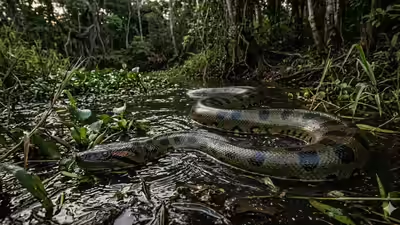
Anacondas rarely appear far from water. Their range follows flooded plains, swamp forests, slow rivers, and heavy tropical wetlands spread across northern and central South America. The snakes are difficult to track properly because they spend long periods hidden beneath muddy water or thick vegetation, so population estimates shift from one report to another. Even in places where they are considered common, sightings are irregular.Most records are linked to the green anaconda, the largest species in the group. It is closely tied to the Amazon Basin, though smaller populations extend into neighbouring wetland regions as well. Geography plays a larger role than borders here. River systems, seasonal flooding, and marsh conditions tend to decide where the snakes remain active.
Estimated anaconda population by country
Countries with the largest anaconda population
1. Brazil
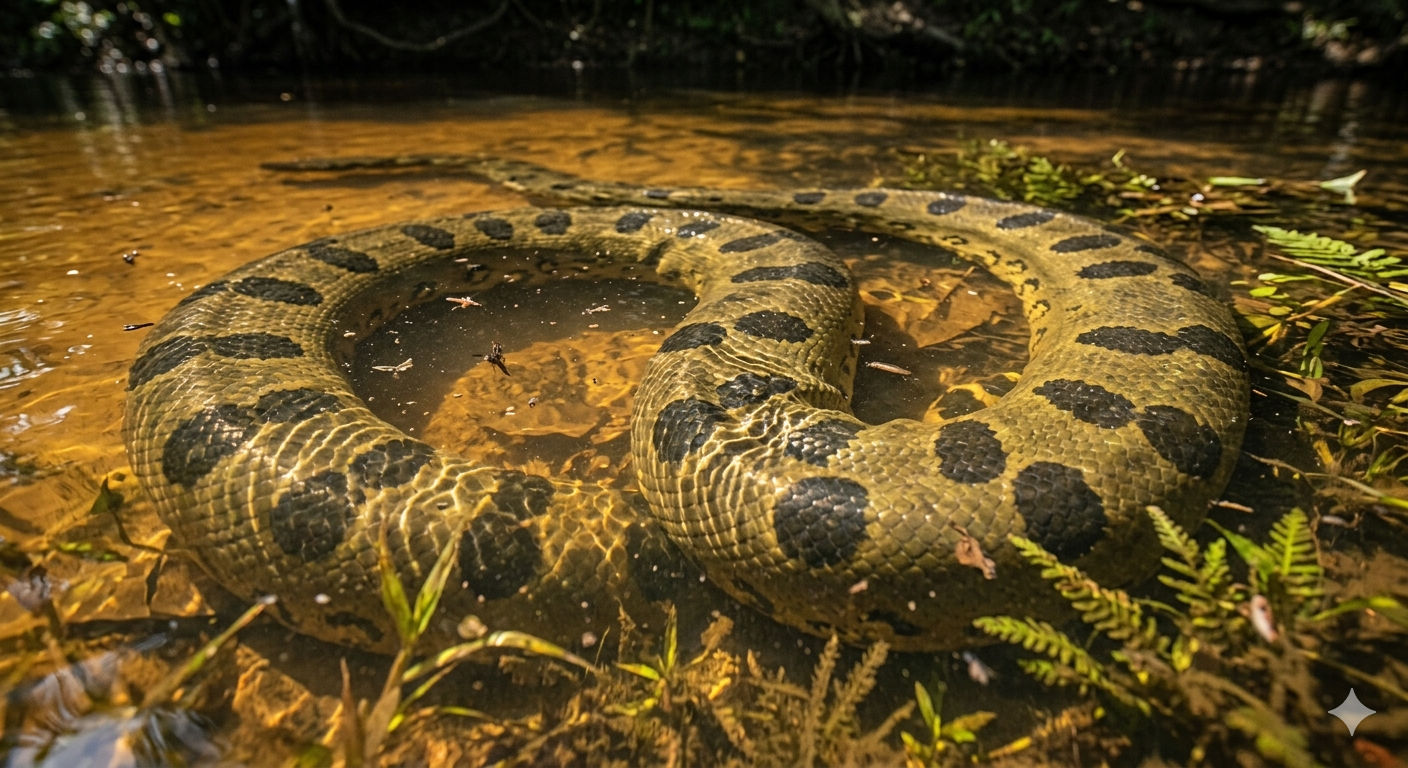
Brazil is generally associated with the world’s largest anaconda population because much of the Amazon rainforest and the Pantanal wetlands fall within its borders. Large snakes are regularly linked with flooded grasslands, jungle rivers, and remote marshes where human settlement remains limited.
2. Venezuela
Venezuela contains broad stretches of the Llanos floodplains, an area long connected with green anacondas. Seasonal rains transform huge sections of land into shallow wetlands that support fish, birds, and mammals, on which the snakes feed.
3. Colombia
Colombia supports anaconda populations mainly in lowland rainforest and eastern river basins linked to the Orinoco and Amazon systems. Encounters are more likely in isolated wetland zones than in densely populated regions.
4. Bolivia
Bolivia has sizeable wetland habitats in its northern and eastern lowlands. Marsh-heavy areas and slow waterways create suitable shelter for anacondas, especially during wetter months when floodplains expand.
5. Peru
Peru contains anacondas within its Amazon territory, particularly around swamp forests and flooded jungle edges. Their range is concentrated in lowland rainforest rather than mountainous areas further west.
6. Ecuador
Ecuador has a smaller population linked to the country’s eastern Amazon region. The snakes are usually associated with remote waterways and humid forest wetlands close to river channels.
7. Paraguay
Paraguay falls within part of the wider wetland network connected to the Pantanal and nearby river systems. Anacondas are present mainly in marshes and seasonally flooded lowlands.
8. Guyana
Guyana contains tropical rainforest waterways where anacondas continue to survive in relatively undisturbed habitats. Most records come from interior regions with dense vegetation and permanent freshwater sources.
9. Suriname
Suriname supports anaconda populations across swamp forests and remote river systems. Thick rainforest cover and humid lowlands provide conditions suited to large aquatic snakes.
10. French Guiana
French Guiana remains part of the species’ natural northern range because of its dense tropical forests and wet coastal river basins. The snakes are largely confined to isolated swampy habitats away from urban areas.