
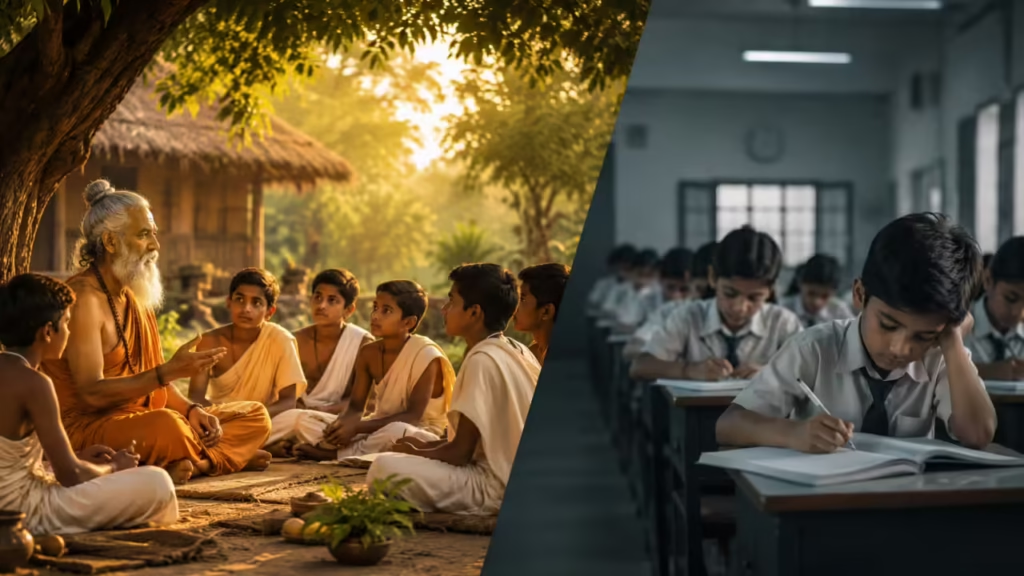

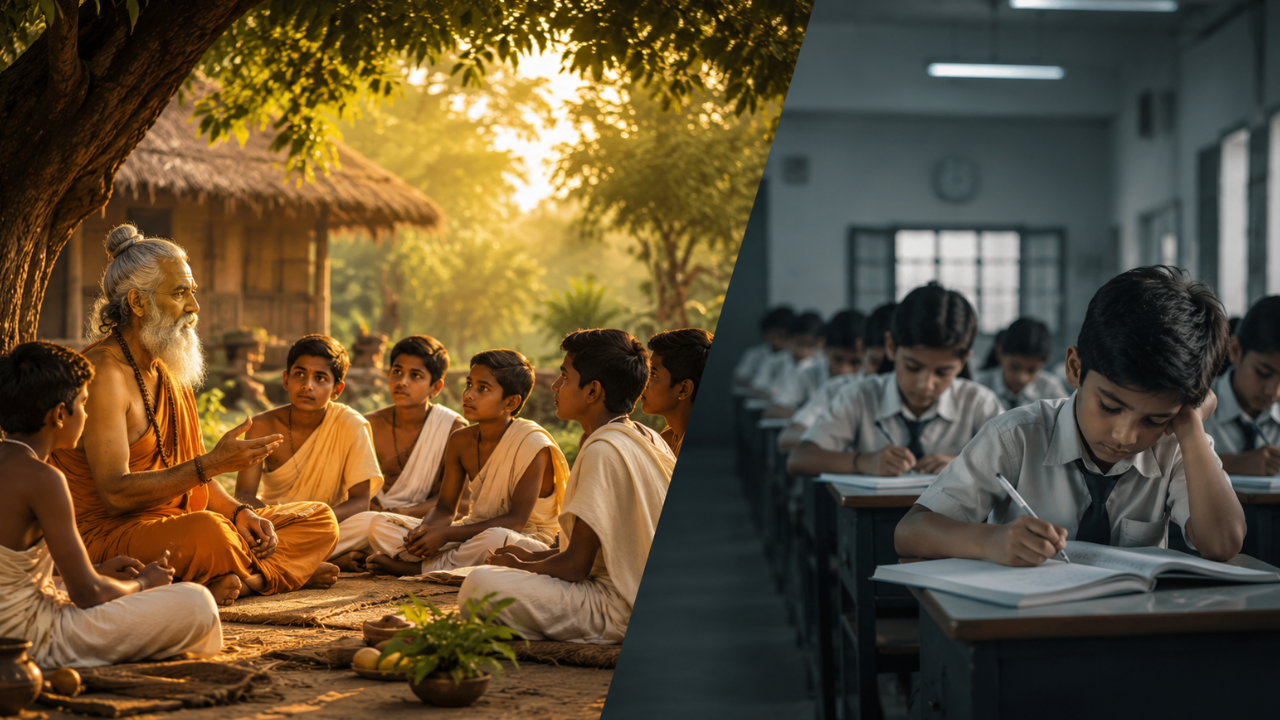
Gurukul education is often remembered as a distant, almost romantic idea from India’s past: students living close to a teacher, learning under trees or in simple dwellings, memorising texts, waking early, serving the guru, and absorbing knowledge in a rhythm very different from today’s classroom. But beyond the nostalgia, the Gurukul system carried something modern schools sometimes struggle to preserve. It did not treat education as a race for marks alone. It treated it as a way of shaping character, discipline, awareness, and responsibility. The point was not merely to produce a clever child, but a grounded one. A child who knew how to listen, how to endure, how to live with simplicity, and how to understand knowledge as something lived, not just recited. That is why Gurukul education still interests people today. In an age of competitive exams, crowded timetables, and constant digital distraction, it raises an uncomfortable question: what exactly are children learning when they sit in modern classrooms, and what are they missing while they do so?