
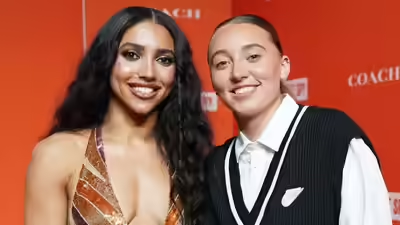
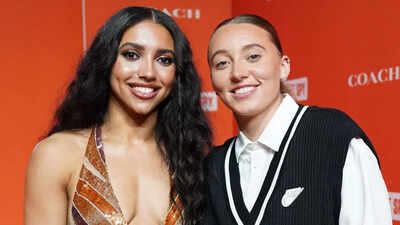
The Dallas Wings used the No. 1 overall pick in the 2026 WNBA Draft to select Azzi Fudd, pairing her once again with Paige Bueckers, a teammate from UConn and, publicly since 2025, her partner. The move brought together two players who had already shared a college programme, a national championship and a long-standing personal relationship, placing them in the same professional backcourt.That combination, both on and off the court, sat in the background of draft night coverage rather than being treated as a central storyline or headline moment, which is what prompted veteran journalist Jeff Pearlman to question whether the story was being fully acknowledged, even speculating about a broader hesitancy in how it was being reported and whether key context was being deliberately downplayed.
What Pearlman said and why it stood out
Speaking in a video posted to his TikTok account, Pearlman focused directly on what he saw as a gap between the obvious context around the Wings’ pick and the way it was being reported. “Azzi Fudd and Paige Bueckers are in a long-term relationship, and nobody’s mentioning it. And the WNBA clearly has asked people not to mention it. And it’s very journalistically confusing to me,” he said. He continued by pointing to the basketball implications of that relationship, not just its personal dimension. “Like, it is fascinating that these two people who have been dating for a long time, dating back to college, would be the starting backcourt for a team. To me, that is actually the number one piece of this story. It’s not just that they drafted Azzi Fudd, they drafted Azzi Fudd to play with her longtime partner, Paige Bueckers.” Pearlman’s argument did not rest on speculation alone; it came from noticing a consistent absence. He noted that the relationship was not referenced during ESPN’s live broadcast of the draft, nor in written coverage from outlets including ESPN.com, The Athletic and the Dallas Morning News.
The suggestion of a wider media pattern
From there, Pearlman moved into what he believed might explain that absence, raising the possibility that access or editorial direction was shaping how the story was covered. “Either the agents of these players or the league itself is telling reporters, if you want access, do not mention this. Don’t bring it up,” he said.The clear pattern in coverage led Pearlman to speculate that either the WNBA or the players’ agents is discouraging mention of the relationship, which he framed less as an isolated editorial decision and more as part of a broader issue around how women’s relationships are treated in sports media, “I actually think it’s more of an unfair judgment of women, not to mention it. Like, why is this taboo?” he said, adding that “two women in a relationship even remotely taboo in 2026” should not be the case at all, arguing it only reinforces outdated stigma around LGBT relationships in sport. “Is that a sign of the times, is that the political world we live in? I don’t understand. But to me … it’s the number one story, that the Wings have taken this roll-of-the-dice on this. Hopefully it’ll work. What happens when you have two people, you reunite them together, they’re in the same backcourt, but they also date, and they love each other, and blah, blah, blah, young love. It’s an amazing, amazing story.”
Why the relationship is part of the basketball story
The Wings’ decision itself had already drawn attention before any of this came up. Going into the draft, several projections had pointed toward other options at No. 1, including players like Olivia Miles or Awa Fam, who were seen as more conventional fits alongside Bueckers in terms of roster balance. Dallas instead chose Fudd, another scoring guard, leaning into familiarity and shared experience rather than positional contrast. That familiarity goes beyond systems or style of play. Fudd and Bueckers first built their connection through USA Basketball at youth level, entered UConn as two of the most high-profile recruits in the country, and spent four years in the same programme, even if injuries limited how often they were on the court together at the same time. Their relationship became public in 2025, adding a layer that is unusual in professional team construction, where it is rare for two cornerstone players to also be partners off the court. Pearlman’s point rests on that overlap. In most cases, personal relationships remain separate from roster decisions or are treated as background detail. Here, the same two players are expected to share minutes, responsibilities and expectations in a backcourt that will shape the team’s direction.
What was acknowledged, and what wasn’t
The relationship itself has not been entirely absent from public coverage. One notable example came from People magazine, which referenced it directly in its reporting on Fudd’s selection, even including it in the headline. At the same time, much of the mainstream draft coverage treated the pairing strictly in basketball terms, focusing on fit, shooting, spacing and roster construction, without referencing the personal context that links the two players.
Where things stand now
There has been some speculation about whether the relationship itself has changed, which could explain the lack of mention, but that does not line up cleanly with what has been visible. Bueckers was in New York on draft night as Fudd was selected and had been present throughout UConn’s NCAA tournament run, which keeps that connection in view even if neither player has addressed it directly in recent interviews. What the Wings now have is a backcourt built around two players who already understand each other well, and that will shape how the team develops from here. How much of that broader context becomes part of the conversation around them, and how it is handled going forward, is still settling