
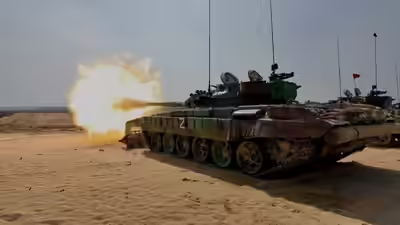
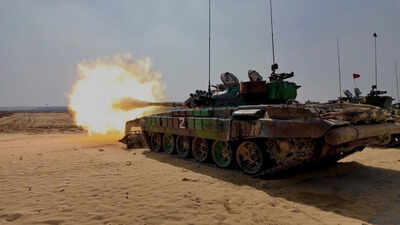
Amid a modernisation drive, the Army is borrowing from air‑force practices by converting T‑72 tanks into remotely operated vehicles using IP‑based interfaces. The aim is to deploy these tanks within a manned‑unmanned teaming (MUM‑T) framework, where crewed and uncrewed assets operate together to multiply combat power. The Army is seeking domestic partners to digitise the Soviet‑origin platform under Innovations for Defence Excellence’s (iDEX) Aditi (Acing Development of Innovative Technologies with iDEX) 4.0 challenge.The unmanned T‑72s are intended for high‑risk missions such as breaching minefields, acting as decoys to draw enemy fire, spearheading assaults, and conducting reconnaissance and patrols in contested zones. The digitised tanks will feed real‑time data into command networks, allowing operators and commanders to retain decision authority. MUM‑T will enable the Army to generate combat mass without exposing tank crews to lethal threats, enhancing survivability, tempo, and operational flexibility.This approach reflects a broader doctrinal shift toward MUM‑T, already being tested by several militaries. China’s Type 100 Smart Tank, for instance, integrates AI‑driven navigation, lidar and modular armour to operate alongside robotic and manned platforms. Australia’s Autonomous Tactical Light Armour System (ATLAS) Collaborative Combat Variant (CCV) has demonstrated autonomy ranging from remote control to autonomous navigation and is armed with a turret system that automates detection and engagement.Introduced in 1979, the T‑72 has served across diverse theatres — from the plains of Punjab and the deserts of Rajasthan to high‑altitude sectors and Sri Lanka’s jungles. Successive upgrades over the decades have enhanced their effectiveness, and converting them to autonomous AFVs offers a cost‑effective way to extend their operational relevance. Unlike the US or China, which are investing in entirely new platforms, India is repurposing legacy armour to bridge capability gaps, aligning the project with the country’s push for indigenous defence innovation.