
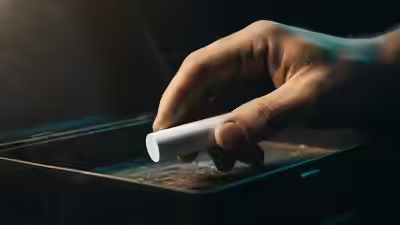
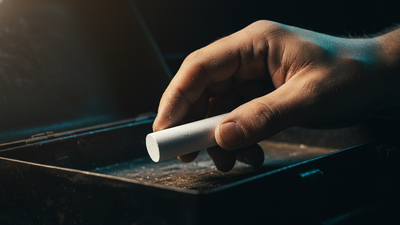
In an era when DIY has taken over most of our homes, a toolbox is the best friend we cannot afford to neglect, and rust does not need much of an invitation to cause damage. It is sneaky, relentless, and it does not care how much you paid for the tool.Most people reach for silica gel packets, those little white pouches that come stuffed inside shoe boxes and vitamin bottles. While they do work, there is a quieter, cheaper, and surprisingly effective alternative that many DIYers swear by: ordinary blackboard chalk.How does chalk even do anything?Chalk is naturally porous, which means it slowly absorbs moisture from the surrounding air. When you put a few pieces of chalk in your toolbox, they draw in the moisture that would otherwise settle on your metal tools and cause rust.The research, Chalk: Composition, diagenesis and physical properties, found that natural chalk, composed primarily of calcium carbonate, has a porosity between 30% and 70%. In practical terms, that means chalk is not really a solid at all. It is a network of microscopic voids that act as tiny traps for water vapour before it ever reaches your tools.However, chalk does not just passively soak up water. A study published in Materials, found that calcium carbonate also maintains a pH between 8 and 9, which is slightly alkaline. Rust forms only in acidic conditions, so chalk works against oxidation by absorbing moisture. Chalk was made to write on blackboards, but its physical structure makes it a surprisingly good temporary desiccant. It works, but with some honest asterisks.Chalk vs silica gel: What you actually need to knowTo be honest, silica gel is the more efficient option. It absorbs more moisture, holds it longer, and can be dried in an oven and reused. Silica gel is the better choice if you are keeping expensive tools in a garage that experiences a lot of humidity changes during the year.Chalk does have one clear advantage, though. You probably already have some, or you can easily get a box. For many millennials, who are trying to save money and build up their first real tool collection, this access is important. Chalk will not outperform silica gel, but in a moderately dry indoor space, like an apartment storage closet or a basement that stays pretty stable, it does enough to make a difference.

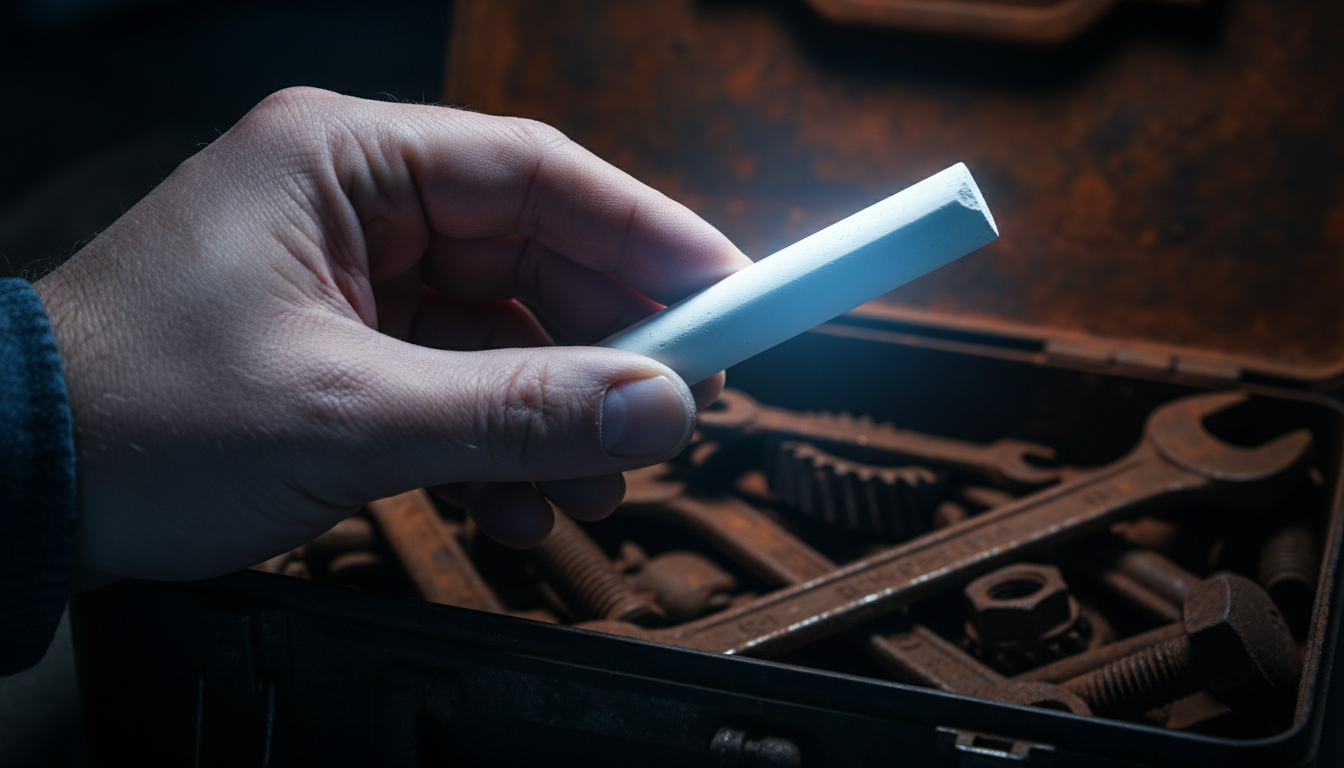
Forget expensive silica gel! Ordinary blackboard chalk offers a surprisingly effective, budget-friendly way to combat rust in your toolbox.
Getting the most out of itJust putting one piece of chalk in the corner of your toolbox and calling it a day will not work. You should place a few pieces in different places so the moisture can reach all of them. You also need to make sure the chalk is actually touching or sitting close to your metal tools, and keep the lid closed when you are not using the toolbox.You will also need to change the chalk every so often because it stops absorbing once it gets too wet. For most people, changing it every month or two keeps things running smoothly in normal indoor conditions.Where chalk falls shortThe truth is that chalk has its limits. Chalk is not the best choice for really damp places, like a garage that stays wet all spring, a coastal climate, or anywhere with very high humidity. It will not absorb moisture from the atmosphere as efficiently as the silica gel, nor can it be recharged. If your tools are expensive or you are keeping them in places where temperature and humidity are likely to change, using only chalk would not be sufficient. In such cases, you should consider using chalk together with silica gel and oiling the metal surfaces of the tools. It is also essential to dry the tools before storing them.Why the DIY crowd loves it anywayPart of chalk’s appeal is that it is completely non-toxic and environmentally safe. When using it, you do not have to worry about exposing yourself to dangerous chemicals or harming the environment. For people who are already thoughtful about what products they bring into their homes, that matters.Chalk is also very convenient to use. You do not have to order it online, keep track of when you need to buy more, or assemble any complicated setup. If you are new to maintaining a tool collection and looking for a low-effort starting point, you should give chalk a try.A humble fix that genuinely holds upChalk will not work as a moisture-control system if you do not take care of your tools seriously. For people storing their tools in a stable indoor space, chalk is a good idea. To maximise its effectiveness, you include it as part of a routine. Check your tools for early rust, clean them, and dry them before putting them away. That stick of chalk does more work than you would expect from something you bought for a kid’s art project.