
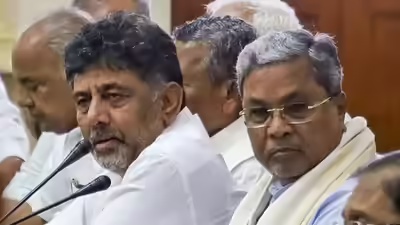
NEW DELHI: Outgoing Karnataka chief minister Siddaramaiah seems to have left a ticking bomb as a parting gift for his successor DK Shivakumar and Rahul Gandhi before deciding to step down from his position on Thursday.A day before resigning as chief minister, Siddaramaiah on Wednesday accepted the Karnataka State Commission for Backward Classes’ long-delayed educational survey report, popularly known as the caste census.Also Read | Siddaramaiah quits, Shivakumar set for top job: Will Congress’s ‘nataka’ in Karnataka end or continue like before?The report on Karnataka’s first caste survey has been ready since 2017, during Siddaramaiah’s previous term as chief minister. After returning to power in 2023, Siddaramaiah ordered a fresh caste survey, the report for which was prepared in 2025.Siddaramaiah’s decision to accept the report just before stepping down is being seen as a significant political message.Critics had alleged that successive governments avoided acting on the first report for fear of backlash from Lingayats and Vokkaligas, the politically dominant communities in the state.With the revised report now formally submitted, the focus shifts to the next chief minister and the cabinet, which will have to decide whether to implement its recommendations.Why it mattersThe Karnataka government’s 2025 caste survey is among the most exhaustive exercises undertaken by the state to map the socio-economic status of backward classes, other castes, scheduled castes and scheduled tribes.Also Read | Siddaramaiah refuses Congress high command’s Rajya Sabha offer: Pressure tactic or long-term strategy?The report is, however, politically sensitive because it has the potential to disrupt Karnataka’s carefully balanced caste equations. Reports suggest that backward communities may outnumber Lingayats and Vokkaligas — the two dominant communities that have traditionally shaped the state’s politics for decades.Siddaramaiah’s AHINDA politics — an alliance of minorities, backward classes and Dalits — was built precisely to challenge that dominance by uniting numerically strong but politically fragmented groups. The caste census report is now seen as empirical validation of the AHINDA bloc’s social strength and could reignite that political battle on a much larger scale.

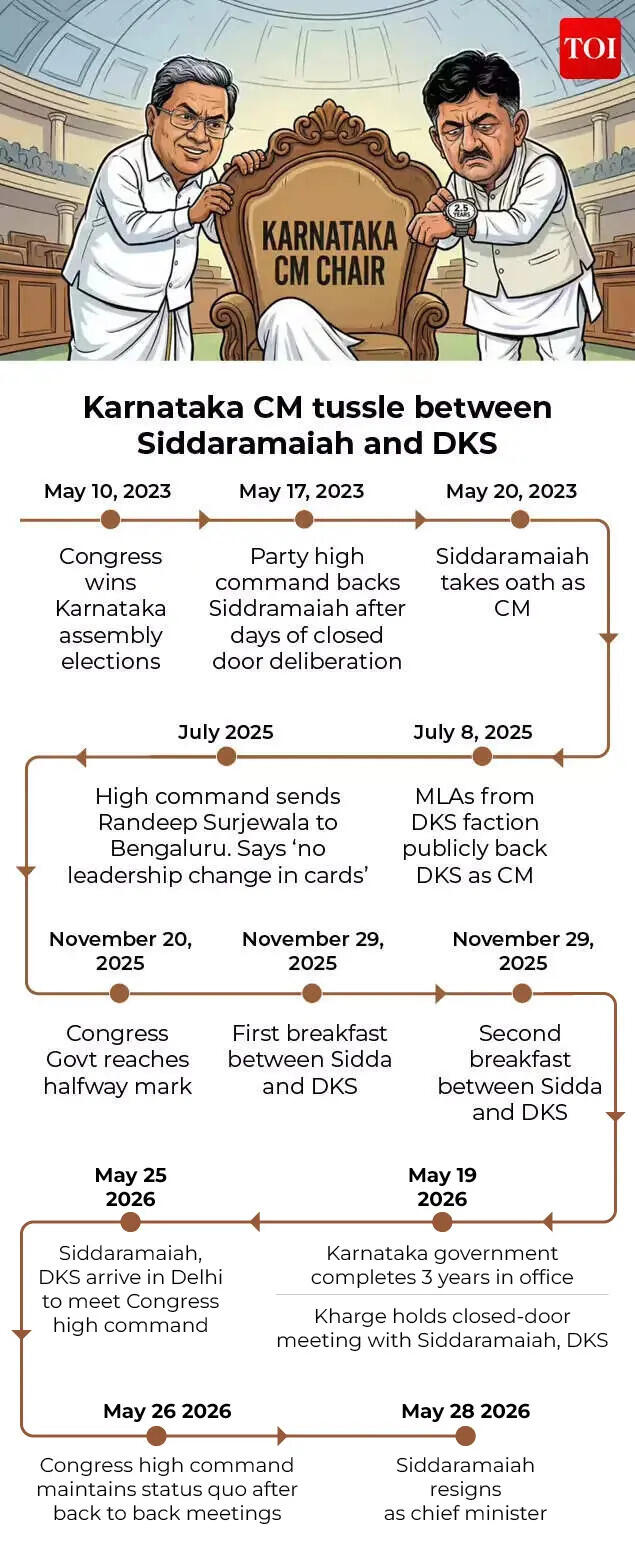
This places DK Shivakumar in a difficult position. Shivakumar is not only the Congress’ most prominent Vokkaliga leader in Karnataka but is also widely credited with rebuilding the party’s organisational structure in the state.If a government led by him moves ahead with tabling or implementing the report, it risks backlash from influential Lingayat and Vokkaliga communities. On the other hand, delaying or shelving the report could alienate the AHINDA support base that Siddaramaiah carefully consolidated for the Congress over the years.In effect, Siddaramaiah has pushed DKS between a rock and a hard place.Rahul Gandhi’s credibility at stake?The Karnataka caste census also creates a political challenge for Leader of Opposition in Lok Sabha Rahul Gandhi at the national level.Rahul Gandhi has made the caste census a central pillar of the Congress party’s national politics. He has argued that accurate caste data is essential for ensuring social justice, fair representation and targeted welfare policies for OBCs, Dalits and minorities.It was Rahul Gandhi who strongly pushed Congress-ruled states to conduct caste surveys in order to project the party as serious about implementing the social justice agenda it advocates politically.Karnataka and Telangana under Revanth Reddy emerged as the biggest testing grounds for that strategy.If the next government under Shivakumar avoids implementing or tabling the report, it could weaken Rahul Gandhi’s larger national narrative on social justice. It would also give the BJP an opportunity to accuse the Congress of demanding a caste census nationally while hesitating to act on it in states where it faces political resistance.