
Proxies’ usually apply to war or near war situations while ‘levers’ are really tools of diplomacy, coercion and negotiation which would be applicable in standoffs without wars actually being fought. They would be also applicable in situations where wars are underway, to limit, ignite or terminate them.Background‘Proxies and levers’ provide a novel theme to analyse, describe and examine from the angle of their applicability to conflict situations. It becomes even more challenging when one starts to look at the application of these in the Middle East. However, not being a phrase commonly used in the language of strategic affairs it needs a basic introduction. This will be done separately for each of the terms that make up the phrase – proxies and levers because they are fairly distinctive. ‘Proxies’ usually apply to war or near war situations while ‘levers’ are really tools of diplomacy, coercion and negotiation which would be applicable in standoffs without wars actually being fought. They would be also applicable in situations where wars are underway, to limit, ignite or terminate them.
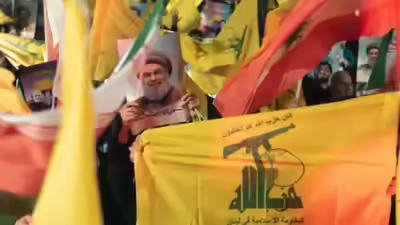
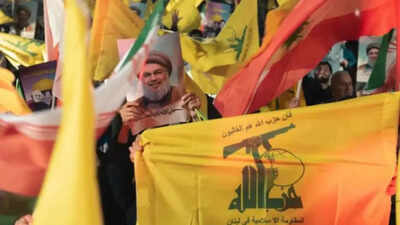
Proxy war‘Proxy war’ denotes a war fought entirely or partially through use of proxies. It is an armed conflict instigated by a nation, which is usually, but not necessarily a big power and does not itself become involved in the violence and physicality of the conflict. Simply explained, it is also an armed conflict where at least one of the belligerents is directed or supported by an external third-party power.Such wars could remain within the conventional realm as has been the case of the Russia-Ukraine war, where Ukraine has acted as the virtual proxy of NATO, led by the US. Alternatively, proxy war may involve violent actions by a set of irregulars sponsored externally and using militant/guerilla or terrorist tactics to achieve their aims. In the Middle East, a good example of proxies are the Houthis in South Yemen, who represent the interests of Iran against the regular forces of the Islamic Military Counter Terrorism Coalition (IMCTC) comprising 41 nations, led by Saudi Arabia. Similarly, the Hezbollah in Lebanon is an Iranian proxy.It is difficult to classify some war-like situations or wars with the label of ‘proxy war’. The Ukraine-Russia war does not have all the characteristics of ‘proxy war’ as described later in this essay, but yet falls within the classification because Ukraine could not have fought the war without the full backing of NATO which has kept itself outside the physicality but enabled Ukraine in every other way to fight. Israel’s wars with the Arab states have also been largely enabled by the full and unequivocal support of the US but these cannot be classified as ‘proxy wars’ and Israel cannot be counted as a proxy of the US because it has a certain capability and will to fight on its own. These wars too do not fit into the characteristics described hereafter. Therefore, demarcation by label, of some wars that have been fought in the Middle East, may not be possible and should not find objection by the reader.Understanding leversThe term ‘levers’ is an aid or assistance which powerful states use to exert influence and manipulate situations to their advantages. Examples of this could be economic aid, military support, diplomatic pressure, humanitarian assistance, economic sanctions or resource control. US support to Iraq during the Iran – Iraq War was a major lever although Iraq was not a US proxy. Levers can therefore be in conjunction with support to proxies or independent of them. A classic example of proxies as levers is the concept as adopted by Iran. It has raised its Islamic Revolutionary Guard Corps (IRGC) to protect the ‘ideological frontiers’ of Iran as well as control the out of area contingencies and opportunities through the use of proxies in a calibrated deniable mode.Reasons for wars in the Middle EastThe Middle East has been a theatre of war for as long as one can trace history. However, in modern times (last 75 years or so) it’s the presence of four factors which have promoted conflicts between nations in this region.
- First and foremost, has been the unsettled boundaries post the colonial period, or the creation of unrealistic boundaries (the Picot Sykes Line being the most infamous). This has led to displaced people such as the Palestinians who have sought return to their lands.
- Second has been energy; that alludes to both oil and natural gas which have been sought for manufacturing and boosting production. Its value went up manifold after 1973’s Yom Kippur war. It is Middle Eastern energy resources that enabled the original manufacturing capability of the US and then of Japan. China’s entire economic and industrial revolution was based upon Middle East energy.
- Third has been the centrality of the Middle East’s location, completely strategic, in the world of channels and sea routes which act as trade highways and are therefore economically very crucial. That is the reason for drawing international attention.
- Fourthly, it is the status of the region as a crucible of different faiths, each passionately clinging to loyalties without any consideration for sharing of cultural and ideological space; each garnering whatever space it could for itself.
Most conflicts here have revolved around one or more of these issues outlined. However, the nature of conflicts has not been uniform. While classic conventional conflicts have been exemplified by the Arab Israeli wars of 1948, 1956, 1967, 1973 and 1982, we have also witnessed other conventional wars such as the Iran-Iraq war of 1980-88 and the two Gulf Wars, 1990-91 and 2003. The presence of irregulars has been a phenomenon across the region and it has been this which has led to the ease of conduct of proxy wars where proxies have been used as levers to seek advantage.Proxy wars of significance in the Middle EastThe prominent proxy wars that have occurred in the recent past and have revealed characteristics which are worth studying for lessons have been the following:Syrian Civil War (2011 onwards) Iran and Hezbollah supported the then Syrian government. Saudi Arabia, Turkey, and the US have supported various antigovernment rebel groups adding to the complexity. The war remains unresolved with a new ruling dispensation in Syria today. At one stage this was a war which had metamorphosed into something in which no one could discern who was fighting whom. This too is a characteristic of proxy wars.Yemen Civil War (2015-present) Iran supports the Houthi rebels. Saudi Arabia, the United Arab Emirates (UAE), and other Gulf states support the internationally recognised Yemeni government. It’s a war which has raged for long. The combined might of the Gulf states and in fact even the 42-nation coalition of Islamic nations has not been able to defeat the Houthis who have also adopted other adversaries and directly targeted Israel and even assets of the US in the Red Sea.Iraq Civil War (2014-2017) Iran supported Shia militias, such as the Popular Mobilisation Forces (PMF) against ISIS. This was a classic case of irregulars versus irregulars. The US and other Western countries supported the Iraqi government and Kurdish forces against ISIS. This was a rare case where the US and Russia were on the same side, against ISIS.Lebanese Conflict (2006, 2024) Iran and Syria supported Hezbollah. The US and other Western countries supported Israel. The 2006 Israel-Hezbollah war was the closest that Iran came to militarily embarrassing Hezbollah. The recent Hezbollah-Israel spat provided Iran the opportunity of indirectly engaging Israel on the northern frontier through Hezbollah.Gaza Wars (2008-2009, 2012, 2014 and 2023-25). Iran supported Hamas and other Palestinian militant groups. The United States and other Western countries supported Israel. The striking thing about the 2023-25 Gaza war is the relative ease with which Hamas prepared itself outside the gaze of Israel’s famed intelligence. This is a characteristic that proxies excel in.Turkish Intervention in Syria (2016-Present). Turkey supported various anti-government rebel groups and the Free Syrian Army. Iran and Hezbollah supported the Syrian government.Saudi-Iranian Proxy War in Bahrain (2011-2012): Iran supported Shia protesters. Saudi Arabia and other Gulf states supported the Bahraini government.These conflicts demonstrate the complex web of proxy relationships in the Middle East, with various regional and global powers backing different factions to pursue their interests. All the proxy wars have certain common characteristics which if correctly identified among adversaries can be focused upon as part of the individual strategy of nations/entities.The characteristics of proxy warsIndirect Involvement. A third-party nation (the sponsor) provides support to non-state actors or irregular forces (proxies) to fight on its behalf. The sponsor avoids direct military involvement, minimising the risk of escalation and potential casualties. Classically, it’s not always a set of irregulars, there can also be nations involved. Such a situation exists in the case where Ukraine acquired the status of a proxy with NATO backing it to push Russia to its own borders without achieving influence over the territories of former constituents of the Soviet Union.Asymmetric WarfareProxy forces often employ unconventional tactics, such as guerrilla warfare, terrorism, and insurgency. These tactics can be effective against conventional military forces, creating an asymmetric advantage. These are low cost and not rule bound. The Houthis are a great example of this. Hezbollah too acquired the status of a quasi-conventional force, after its initial hit and run successes against the Israeli Defence Forces (IDF). Such a transformation does take place over time. ISIS capability to fight conventional urban warfare at Mosul and Idlib surprised many. As long as such forces have the flow of funds and logistics, they can be deadly, both from conventional and unconventional angles.DeniabilitySponsors may deny involvement or support for proxy forces, maintaining plausible deniability. This ambiguity can make it difficult for opponents to respond effectively or to hold the sponsor accountable. International support and condemnation also become a challenge. Away from the Middle East, we in India suffer from this at most times, with 35 years of denial by Pakistan without loss of face. Iran has never admitted that Hezbollah and Hamas both fight on its sponsorship. From an international legal angle Iran remains above board.Limited controlSponsors may have limited control over proxy forces, which can lead to unpredictable behavior and unintended consequences. Proxy forces may pursue their own agendas, which might not align with the sponsor’s objectives. The classic example is that of Hamas which in the case of the Oct 7, 2023 raid into Israel, probably overplayed its cards and got enmeshed in an unwinnable and self-destructive situation. Its leadership led the people through a false narrative of potential success without letting it dawn on the public that the international community could do little in the face of a US-Israel strategic combine.Long-Term commitmentProxy wars can be protracted, with conflicts lasting years or even decades. Sponsors must be prepared to provide sustained support, including financial, military, and logistical assistance. The Syrian civil war is one such situation where even now with regime change there is no surety of conflict termination. The proxy war through Lebanon fought with extended support by the Iranian Islamic Revolutionary Guard Corps (IRGC) has now encountered a situation where supply lines have been cut. It applies to Hamas too. Alternatives have to be sought and Iran has to seek tie ups within Syria to keep its interests alive.Regional and global implicationsProxy wars can have far-reaching consequences, affecting regional stability and global security. Conflicts can spill across borders, drawing in other nations and creating complex, multiparty conflicts. The best example of this has been Syria and its civil war where alignments have changed and the war shifted into Northern Iraq. Iran, Israel, Turkey, Russia, and the United States were all drawn into the conflict either directly or indirectly over the years. Syria’s civil war morphed from small acts of anti-Assad defiance to one of the deadliest and most complex wars of the 21st century.Humanitarian concernsSuch wars often result in significant humanitarian suffering, including civilian casualties, displacement, and human rights abuses. The use of proxy forces can lead to a lack of accountability and impunity for war crimes. Rules of conflict are more often applicable only in name. The case of Gaza in a proxy war is there for all to see.Economic motivationsProxy wars can be driven by economic interests, such as control over natural resources, trade routes, or strategic territories. Sponsors may seek to exploit these resources or disrupt their opponents’ access to them. In September 2019, a drone attack was launched on the Saudi Aramco oil processing facility in Abqaiq and Khurais oil field in the Eastern Province of Saudi Arabia. The attack knocked out half of the country’s oil supply; the claimants for the attack were many.Ideological and sectarian dynamicsProxy wars often involve ideological or sectarian components, with sponsors supporting proxies that share their worldview or religious affiliation. These dynamics can fuel further conflict and create long-term divisions within societies. Hezbollah, is often described as a non-state actor or a hybrid organisation, blurring the lines between a political party, a social movement, and an armed militia. Hezbollah’s relationship with Iran is a key aspect of its identity and operations. Iran provides significant financial, military, and ideological support to Hezbollah, which has led many analysts to characterise Hezbollah as an ideological proxy force for Iran.Difficulty in conflict resolutionProxy wars can be challenging to resolve, as sponsors may not be directly involved in peace negotiations. The complex web of interests and allegiances can make it difficult to achieve a lasting peace agreement. There are several reasons for this. Briefly some of these could be:-
- Complexity of Interests. Multiple actors, including state and non-state sponsors, proxy forces, and local parties, have competing interests, making it difficult to negotiate a mutually acceptable solution.
- Lack of Direct Control. This complicates matters as we have just witnessed in the case of the Gaza war. Neither US nor Iran had direct control on the proxies; Israel is not being touted here as a US proxy but the US is definitely a sponsor of Israel with the kind of support extended
- Asymmetric Power Dynamics. Unequal bargaining power comes from the strength of the sponsors. An example is the comparison between the US and Iran as sponsors of conflict. The trust deficit in such cases is far too large.
- Multiple Layers of Conflict. Proxy wars often involve multiple layers of conflict, including local, national, regional, and international dimensions. Identifying core issues and treating others as peripheral sometimes draws the ire of some groups. Consensus is hardly possible due to lack of disciplined ethos.
- Difficulty in Building Trust. Peace talks are many times sabotaged by different groups. Security forces of a nation may have a ceasefire with some groups and remain at war with others. Small proxy groups can sometimes wield out of proportion power.
- Limited Incentives for Peace. Most proxy conflicts provide sustenance to non-state actors who fear their loss of significance when peace prevails.
- Challenges in Verification. Execution of an agreement becomes a challenge due to intra group rivalries and inability to have verification teams which may be externally provided or formed jointly.
- Risk of Spoilers. Proxy wars often involve spoilers, who may deliberately undermine peace efforts to maintain their influence or interests. Addressing the concerns of these spoilers can be difficult.
- Historical and Cultural Factors. Legacy wars which have proxies as part of them are usually complex and hence need political and diplomatic intervention which proxies or some of their sponsors may find difficult to provide.
- Complex Interactions. The relationships between state sponsors and their proxies are often multifaceted, characterised by shared interests but also distinct local agendas. For example, while Iranian-backed groups may align with Tehran’s broader ideological goals, they also pursue local objectives that can diverge from their sponsors’ interests. This complexity can lead to unpredictable outcomes in conflicts and a refusal to resolve them on the sponsor’s terms.
Thus, we have seen that conflict initiation in the case of proxy wars is simple. A big and violent act is sufficient to commence a war. Conflict progression is contingent upon political and diplomatic will, logistics, financial capability and supply chain availability. Conflict termination should precede conflict resolution because with ongoing hostilities and extreme violence peace parleys are impossible to succeed.The power of levers in conflicts of the Middle EastAs mentioned before, levers are instruments, tools or means used by nations to coerce, threaten or simply dominate adversaries before, during or after a standoff or a war. They have the basic characteristic of exacerbating, extending or limiting a warlike situation. Many times, they can also be used for war avoidance. The use of levers can be complex and could involve some of the following:Economic Power: In the Middle East, oil and gas, economic sanctions and economic aid, all act as big levers. Closure of the Straits of Hormuz or the Red Sea routes affects the movement of oil and gas and the international community always works to prevent that because it has a major effect on energy prices and thus economic development. Anything to aid or adversely affect economies has a major effect. The 600-vehicle convoy of humanitarian aid waiting outside Gaza influenced Hamas to accept the ceasefire. Economic power or the quest for it is also a lever for conflict prevention in the case of the Gulf states, all of whom prefer to buy peace at a price. The Arab or Islamic affinity does not draw them into supporting the Palestinian cause in a more robust way.Diplomatic Power: International organisations play a role in shaping regional dynamics, such as the United Nations involvement in the Arab-Israeli conflict. Big powers too have considerable leverage; the US under Jimmy Carter started the peace process for Egypt which transformed Egypt’s approach to conflict. Regional organisations too influenced conflicts such as the Arab League’s role in the Syrian Civil War. Bilateral relationships shaped regional dynamics, such as the US-Israel relationship and the Iran-Russia relationship.Big Power Involvement: The absence of war is usually associated with the lack of big power interest in a region. The Middle East with its well identified strategic dynamics is not such a region. The interests of the former colonial powers, UK and France persist while Russia, US and China all have their interests too. Alignments and equations thus form an important part of conflict prevention. Despite their interests and presence, low scale powers such as Iran can be disruptive. Levers can thus sometimes be those that exercise power out of proportion to their capability due to their disruption capability.Non State Actors: These have been the cause of and also the means to fight various conflicts. The rise of non-state actors such as Hezbollah, Hamas, and various militias has added layers of complexity to Middle Eastern conflicts. These groups often act independently of their state sponsors, driven by local grievances and aspirations that can lead to unpredictable escalations, of the type we have witnessed on October 7, 2023. Their involvement complicates traditional state-centric approaches to conflict resolution which are easier to discern.The Power of Sanctions: Sanctions may be considered by some as effective tools of diplomacy. Many a time these actually create greater determination in sanctioned powers to resist. Iran is a typical case. We have witnessed the case of Russia whose economy actually improved after sanctions were imposed on it.The ConnectThis essay would be incomplete without describing and analysing the direct linkage between proxies and levers in conflict situations. Actually, several times proxy forces act as levers on behalf of the sponsor states or organisations.Proxy groups serve as levers for regional powers to assert control over local conflicts. For instance, Iran’s support for Hezbollah in Lebanon and the Houthis in Yemen exemplifies how it leverages these groups to counter Saudi influence and disrupt US interests in the region. The involvement of these proxies often escalates conflicts into broader regional struggles, transforming localised disputes into significant geopolitical confrontations. Many times, the triggering of tension in these peripheral conflicts is used to prevent any initiation in major conflicts such as the Arab – Israeli ones.A few lessons for IndiaStrategic Use of Proxies: India already has great experience in handling the threat of proxies. We need to think offensively too, should the need for our own use ever come up. However, we must be cautious, as reliance on proxies can lead to unintended consequences, including blowback or loss of control over the proxy action.Managing Sectarian and Ethnic Divisions: Deficiency in this sphere can lead to exploitation of the internal instability by adversaries. Hence the social environment needs to be always under scrutiny.Countering Terrorism and Extremism: The Middle East has been a breeding ground for terrorism and extremism, often fueled by external interventions. India faces similar challenges from cross-border terrorism, particularly from Pakistan-based groups. India must continue to build international consensus against terrorism and strengthen our counterterrorism capabilities to prevent opportunities arising for exploitation.Self-Reliance or Atmanirbharta: This has to be the mantra for the future to prevent strategic levers being employed against India. At the moment we are looking with focus towards defence manufacturing; ultimately this applies to everything. Tariff wars will only increase and we are heading towards an era in which trade practices will be unpredictable.Avoiding Over-Reliance on Military Solutions – Lesson for India: The Middle East demonstrates that military interventions often exacerbate conflicts rather than resolve them. India should prioritise diplomatic and political solutions to regional disputes, such as its ongoing tensions with Pakistan and China. Military strength is important, but it should be complemented by dialogue and confidence-building measures with the entire neighborhood.Agility in Geopolitical Understanding: A realistic approach is necessary in India’s approach to international geopolitics. We are doing well in the game and have demonstrated an ability to walk a tightrope but as comprehensive power increases so will pressure for taking decisions on many worldwide issues. We must continue our current policy; it has stood us in good stead.ConclusionThe dynamics of proxy warfare in the Middle East illustrate a complex interplay of regional and global influences that shape ongoing conflicts. Proxies serve as essential levers for state actors, enabling them to project power, pursue strategic objectives, and engage in asymmetric warfare without the direct costs associated with military interventions. However, this reliance on proxy forces often leads to unintended consequences, including prolonged violence, instability, and humanitarian crises. As external powers continue to support various factions in pursuit of their interests, the region faces a cycle of escalation that complicates efforts toward lasting peace. The concept of ‘proxies and levers’ though a dangerous course that nations follow for conflict management, is a means to pursue conflict at a lower pitch with lesser chances of escalation. Of course, the main conflagrates will always bear the risk of a fallout beyond what they can reasonably assess.This article was originally published in The Chanakya Diaries