
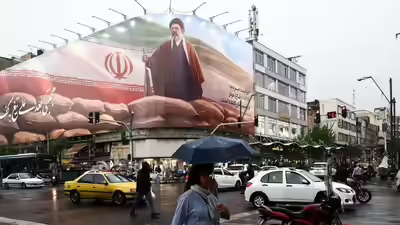
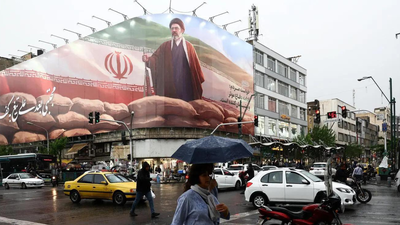
At first glance, the continued absence of Iran’s Supreme Leader, Mojtaba Khamenei, looks like a sign of deep instability. In most political systems—especially one as centralized as Iran’s—the disappearance of the top authority would trigger chaos. But in Iran’s current moment of crisis, that very absence may be doing the opposite – helping the regime stay afloat.The Supreme Leader has not appeared publicly since being linked to succession after the reported death of Ayatollah Ali Khamenei. His name continues to surface in official messaging, but without any visible engagement or confirmed presence in decision-making.Even the statements attributed to him have been circulated through state media and even AI-generated videos, reinforcing the perception of a leader who exists symbolically but not physically in public governance, CNN reported.
IRGC expands control
In the absence of visible leadership, Iran’s Islamic Revolutionary Guard Corps (IRGC) has reportedly stepped into a far more direct governing role. Fox News and Iran International reported that IRGC commander Ahmad Vahidi blocked President Masoud Pezeshkian’s attempt to appoint a new intelligence minister, rejecting all proposed candidates, including Hossein Dehghan. The reports state that Vahidi insisted all sensitive appointments be handled directly by the IRGC under what he described as wartime conditions. This has effectively sidelined civilian decision-making in key security portfolios, even though, under Iran’s system, such appointments typically require approval from the supreme leader.Moreover, Pezeshkian’s administration has been pushed into what it describes as a “political deadlock.” The president’s authority to advance key decisions appears limited, particularly in areas related to intelligence and national security, the Financial Express reported. Iran International also reported that Pezeshkian has repeatedly sought meetings with Mojtaba Khamenei, but those requests have gone unanswered, deepening uncertainty over where final authority currently lies.
Is Khamenei being used as a political cover?
Analysts suggest that the system is using Mojtaba Khamenei’s name as a form of political cover.“Mojtaba is not in a state where he can actually make critical decisions or micromanage the talks,” but that “the system is using him to get final approval for key broad decisions and not (for) the tactics for the negotiations,” CNN quoted Ali Vaez saying.“The system does deliberately highlight Mojtaba’s involvement because it provides a protective shield for that against internal criticism… unlike his father who would come out regularly and comment on the state of negotiations,” he said, adding, “Mojtaba is missing in action, so attributing views to him is a good cover for Iranian negotiators to protect themselves from criticism.”At the same time, Iran’s political messaging has continued to stress unity. State-affiliated outlets have dismissed claims of internal fragmentation, while senior figures such as parliament speaker Mohammad Bagher Ghalibaf and foreign minister Abbas Araghchi have remained visible in diplomatic engagements, including talks reported in Islamabad.US Vice President JD Vance said after last week’s talks failed to produce a deal that the Iranian delegation had to go back to Tehran to seek approval from either the Supreme Leader or “someone else.”So far, no agreement could really hold in Iran without the Supreme Leader’s endorsement. But now, the system may be moving into a phase where having the leader’s public approval is no longer strictly necessary.