

Even in an era where we’ve become accustomed to constant thundering, thanks largely to the orange thunderer-in-chief, Vivek Ramaswamy’s 2024 Boxing Day was the oratorical equivalent of a bull in a china shop. In a remarkable social media post that would gladden the heart of any Tiger Mom, and Vivek even trained under the OG Tiger Mom at Yale, he lashed out at American culture for “venerating mediocrity over excellence”, watching too many Friends reunions and hanging out too much at the mall. The reason Silicon Valley preferred H-1Bs to Americans, Vivek argued, without saying it out loud, was that Americans had become too lazy. In a movement like MAGA that is always looking to find an outsider to other, Ramaswamy’s outburst suggested that this non-Christian brown man doth protest too much. It might have been one of the few times that Ramaswamy’s silver tongue got him into a little too much trouble for not being economical with the truth about his thoughts.This wasn’t the first time Vivek’s silver tongue had rubbed people the wrong way, but for a person who had built his base on mocking DEI, woke capital and gender ideology, the attack on a core MAGA base was a bridge too far. It certainly appeared that way when he left DOGE, or was shunted out, and hinted at his next journey in Ohio. His co-DOGE founder Elon Musk would have his own fallout with MAGA, which included a famous tweet about Trump being on the Epstein list, but Vivek is now back as the Republican nominee for governor of Ohio, surviving a cultural firefight that might have felled lesser politicians.But Vivek’s rise, if things go according to plan he might become the third Indian-origin governor of an American state after Bobby Jindal and Nikki Haley, is not just a litmus test of an Indian-American’s success story in US politics. It is a test of how far the MAGA tent will accommodate a brown non-Christian man and also how far an Indian-American can go in Trump’s America.
The Vivek origin story
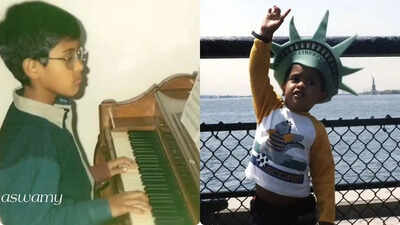
Vivek’s parents are Palakkad Iyers from Tamil Nadu and, as critics are wont to point out, belong to the highest strata in the Indian caste system. Not that being a Brahmin would have been a huge benefit in the greater Cincinnati area, where Vivek quickly became the kind of kid your parents’ neighbours bragged about. A quintessential overachiever, he was an accomplished pianist, a nationally ranked tennis player and a valedictorian at his Jesuit high school. He graduated from Harvard College and Yale Law School, worked at a hedge fund, then started a pharmaceutical company, Roivant Sciences, where he made hundreds of millions of dollars.

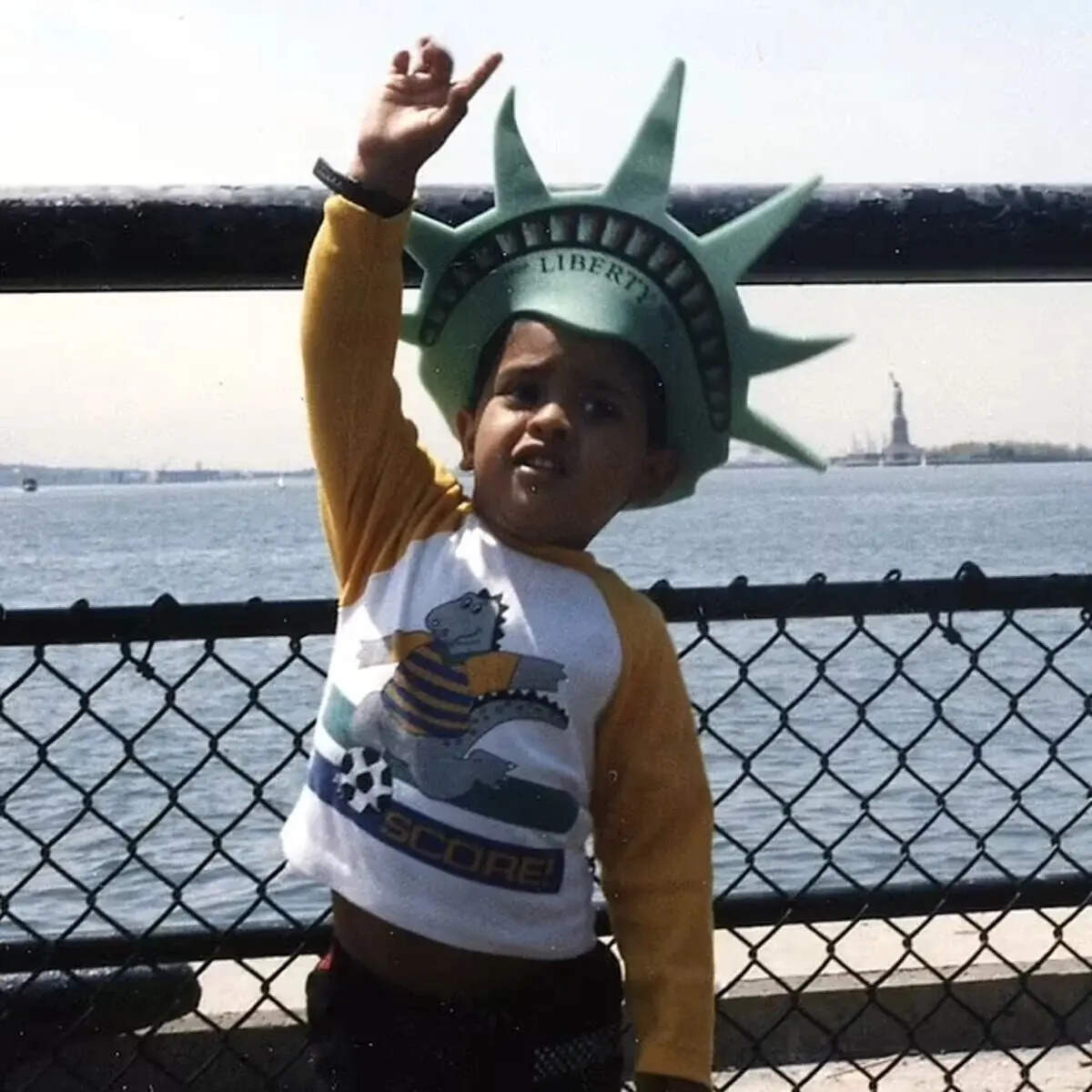
Vivek for OHIO
A major chunk of his wealth came from a failed effort to bring an Alzheimer’s drug to the market, which critics hold up as some elegant sort of fraud, but which hardly involved any wrongdoing. Still, it’s not a topic Ramaswamy dwells on in his speeches.In another era in American politics, that would have been the entire story: immigrants, elite education, private-sector glory, eventual TED Talk, perhaps a think-tank fellowship and an annual Davos panel about innovation. But Ramaswamy was born for a weirder America, one in which the fastest route from biotech fortune to political fame was not policy expertise but cultural grievance.Before he became the anti-woke entrepreneur, before he became the man of “10 truths”, before he became the Hindu Republican who told Christian conservatives that he was running for commander-in-chief and not pastor-in-chief, there was Da Vek. During his Harvard undergraduate years, Ramaswamy had a libertarian-minded rap alter ego inspired by Eminem. Many years later, Eminem would lose his cool at Vivek and ask him to stop performing his epochal classic Lose Yourself, but the fact that the talented pianist preferred a hostile crowd and a mic to win over tells us a lot about him.That contrarian instinct became his brand.
In Woke, Inc., in Fox News appearances, in attacks on ESG and corporate virtue-signalling, Ramaswamy offered conservatives something they craved: a brown man with Ivy League polish telling them that diversity politics was a scam, wokeness was a secular religion, and the real victims in America were ordinary citizens whose institutions had been captured by liberal elites.
Vivek for Ohio
Ohio gives Ramaswamy something the presidential race never could: a winnable kingdom. In 2024, he was running in Trump’s shadow, a slicker, younger and more articulate version of the same anti-woke insurgency, but without Trump’s unique permission slip from the Republican base. In all honesty, he already knew what he was there to do with Trump missing from the debate: cut down his opponents.The presidency was always a pipe dream; Ohio is not. It’s an American state where decline isn’t abstract but a landscape: hollowed-out factories, an opioid crisis, megachurches, warehouses, resentment and nostalgia. It’s also JD Vance country, the place where the Republican Party mastered the art of turning post-industrial melancholy into populist theology, a land where Vivek can sell meritocracy to people who feel betrayed by meritocracy.

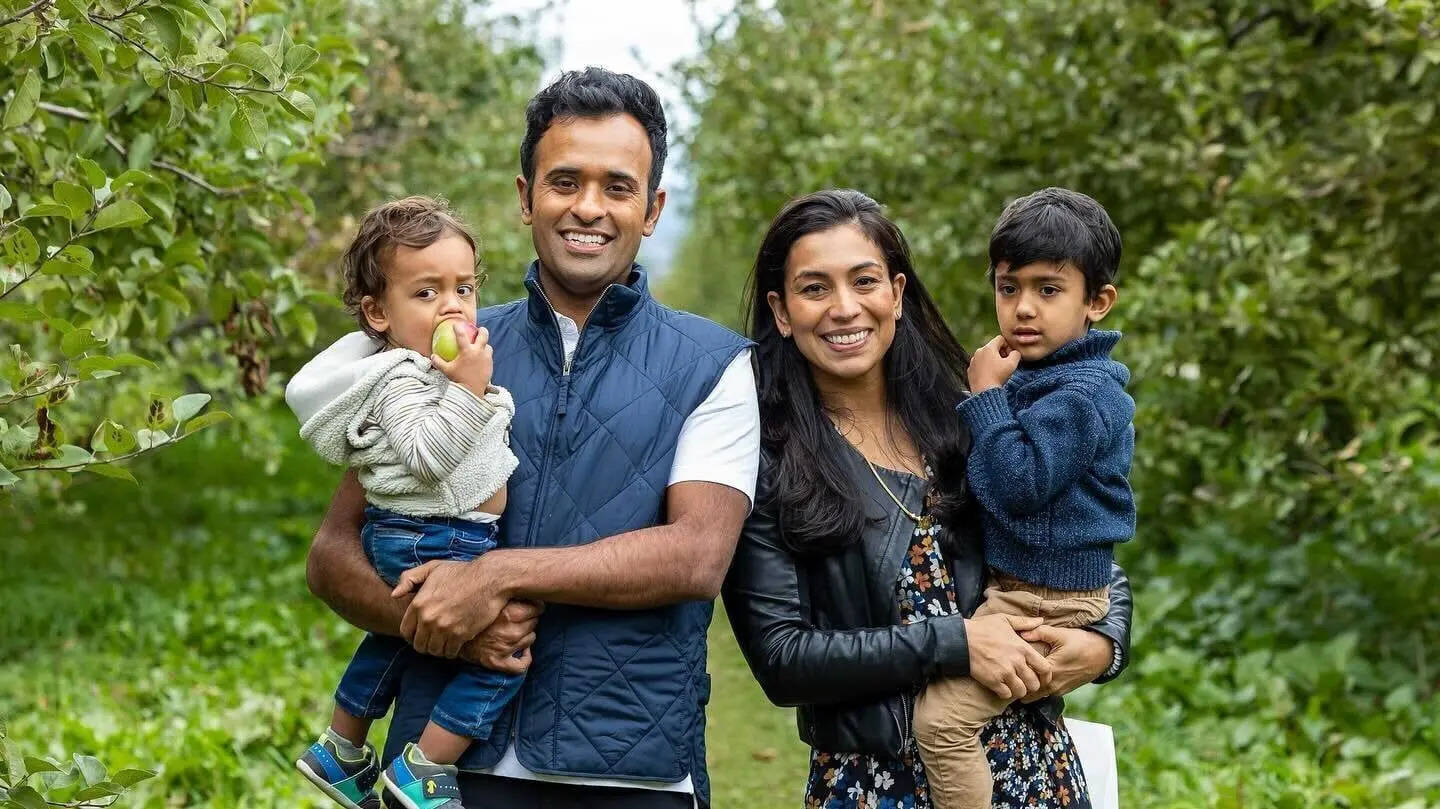
His Ohio agenda is basically Vivekism translated from podcast metaphysics into state government: cut taxes, eventually eliminate the state income tax, roll back property taxes, expand school choice, push merit pay for teachers, reduce regulation, make energy cheaper, bring back industry, reward excellence and punish dependency. It is an agenda with enormous emotional clarity and very little fiscal modesty. The promise is not merely that Ohio will be governed better. The promise is that Ohio will become the anti-woke republic of competence that America forgot how to be.But politics is rarely a spreadsheet competition. Ramaswamy understands that a campaign promise does not always need to be fully costed to be fully felt. His promise to Ohio is psychological as much as economic. He is telling voters: you were great once, and the people who made you small should not be in charge anymore.The taste was in the pudding, where Ramaswamy won with, as one Twitter user pointed out, Assad-level numbers. “Never Vivek”, the refrain of Groypers like Nick Fuentes, seemed like an angry comment section.The main gubernatorial race is not a coronation. Amy Acton, Ohio’s former health director and his Democratic opponent, is a particularly skilled contestant, one who calls herself Ted Lasso and paints a picture of eternal optimism. If Vivek is selling Ohio a future of deregulated excellence, Acton is being forced to carry the emotional memory of hand sanitiser, shuttered classrooms and press conferences from a traumatised decade.The Acton-Ramaswamy race is therefore not merely Republican versus Democrat. It is one pandemic memory versus another. Acton represents the exhausted adult in the room, the doctor asking people to stay home, wash hands, trust models and accept sacrifice. Vivek represents the backlash to that adult: the child of excellence politics telling voters that the experts were not wise, merely powerful, and that caution became a form of rule.
MAGA vs Indians
The great irony of Ramaswamy’s rise is that he became a MAGA star by mastering the language of a movement that still contains people who would never fully accept him.As long as Vivek was attacking DEI, woke corporations, campus liberals, federal bureaucrats and the new secular religions of the left, he was useful. He was the perfect anti-liberal Indian-American: brown enough to irritate Democrats, rich enough to impress Republicans, eloquent enough to go viral, and ideologically aggressive enough to reassure MAGA that diversity was fine as long as it arrived wearing a red tie and quoting the Founding Fathers.Then came the Boxing Day post. Suddenly, the model minority became the imported elite. The anti-woke brown man became the Hindu-Indian billionaire. The son of immigrants who had proved the American Dream became, in the eyes of the nativist right, proof that the dream had been stolen.That is why the Nick Fuentes post matters. “The GOP thinks they can force us to elect a Hindu-Indian anchor baby billionaire who blames ‘lazy Americans’ for being destroyed by free trade & mass migration,” Fuentes wrote. “We can afford to lose Ohio for 4 years if Vivek Ramaswamy is retired forever. NEVER VIVEK.”It is a poisonous sentence, but analytically useful. Fuentes is not the Republican Party. But he says in sewer language what more respectable people gesture towards in committee-room language. His attack compresses the whole anti-Vivek case into one formulation: race, religion, birthright citizenship, wealth and betrayal of the native worker. The complaint is not simply that Vivek is wrong on H-1B. The complaint is that he is racially, religiously and culturally illegitimate as a Republican standard-bearer.The broader MAGA civil war over Indian-Americans follows the same pattern. At one level, it is a fight between a tech-meritocratic, capital-friendly, high-skill-immigration wing and a restrictionist, white-identitarian or Christian-nativist wing. Indian-Americans become flashpoints because they sit at the exact intersection of the disputes: model-minority success, immigration policy, religion and the unresolved racial boundary of MAGA belonging.That fight has had several chapters. Ann Coulter told Ramaswamy she would not vote for him because he was Indian. The Sriram Krishnan fight turned a personnel appointment into a referendum on H-1B visas, Silicon Valley influence and Indian presence in elite tech. Laura Loomer, Steve Bannon and other restrictionist figures pushed the argument in one direction; Musk, Ramaswamy and the tech right pushed it in another. The result was a coalition argument pretending to be a visa argument.This is the Indian-American Faustian bargain with MAGA. You can be celebrated if you attack wokeness. You can be platformed if you denounce DEI. You can become a star if you say America is being destroyed by weak elites, feminised institutions, racial guilt and bureaucratic decay. But the moment you defend immigration, Hindu identity, or the global meritocracy that allowed Indians to thrive in America, the old border guards return.Vivek’s great political innovation is not that he is Indian-American. It is that he has turned Indian-American overachievement into a MAGA argument. He does not ask America to be more tolerant. He asks America to be more worthy of people like him. MAGA does not love Vivek despite his arrogance. It loves him until the arrogance is directed at MAGA.
How Vivek tamed Trump and MAGA
Ramaswamy did not tame MAGA by defeating it. He tamed it by understanding its hierarchy. Trump remains the sun. Everyone else is either a planet, an asteroid or space debris. During the presidential primary, Vivek understood this better than Ron DeSantis, Nikki Haley or Chris Christie. He did not run against Trump in the conventional sense, he was Trump’s younger echo. He attacked the same enemies, but with better syntax and Ivy League polish. He wasn’t debating his peers, he was auditioning for the future.

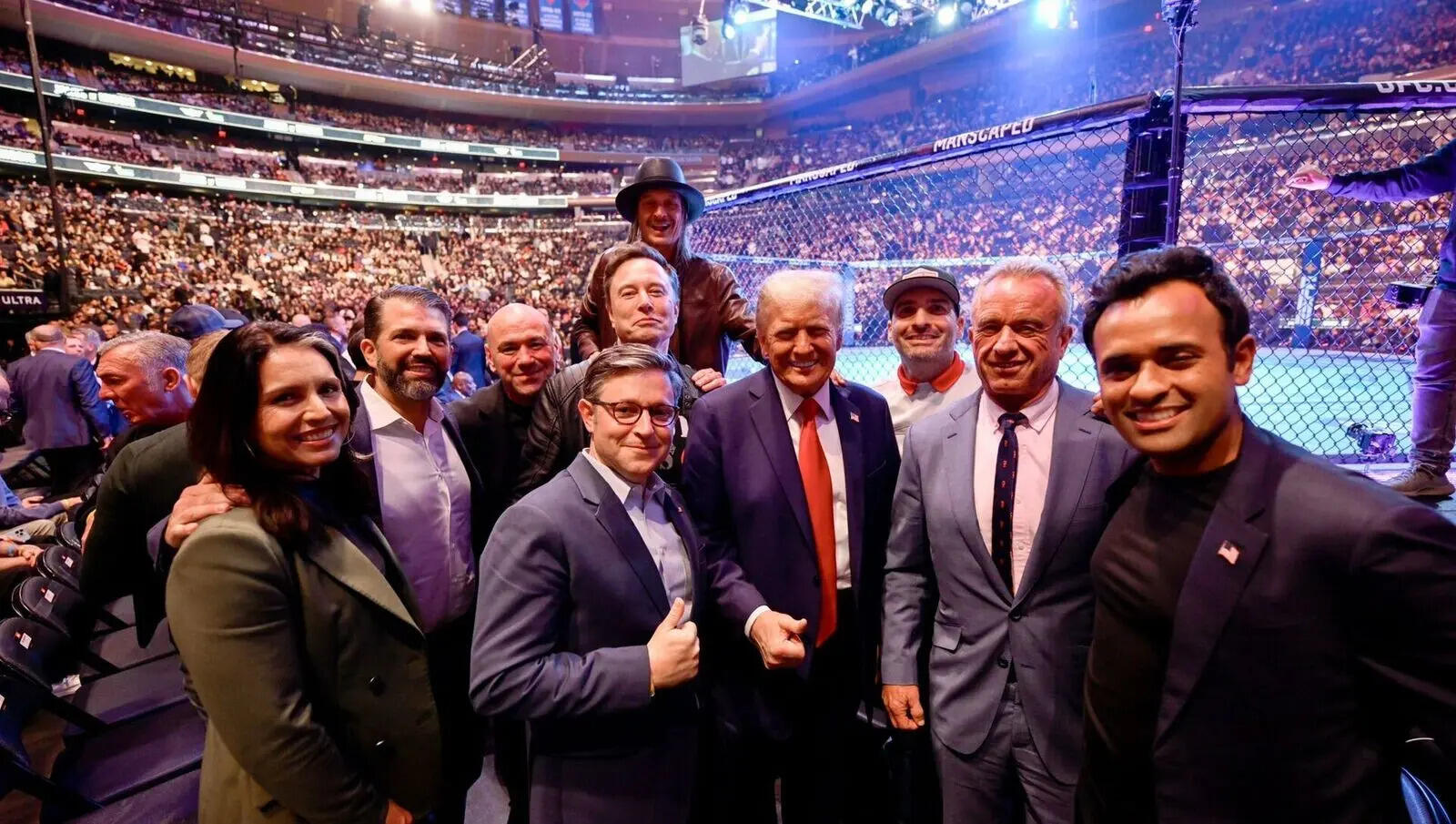
No one was surprised when he dropped out to endorse Trump, and his elevation to DOGE co-chair was a fantasy that a spreadsheet aristocracy could debug state pilfering with bad code. The tweet episode was bad but the departure from DOGE was just a hiatus because Vivek never did the one thing that can get one exiled from MAGAland: criticising Trump. He may have annoyed nativists, but he remained useful to the broader movement. And when the Ohio race came, Trump’s endorsement gave him the one thing every Republican candidate now seeks: permission to exist.In Trump’s Republican Party, there are many sins: racism, incompetence, ideological incoherence, grifting, conspiracy theories, failed predictions, bad polls, bad jokes and worse lawsuits. Almost all are survivable. The one unforgivable sin is disloyalty to Trump. Vivek grasped this early. He could irritate MAGA, provoke nativists, anger the H-1B restrictionists and sound like a McKinsey consultant with a copy of the Gita, but he could not cross Trump. He never did. That is why he survived.The Ohio primary result proved the strategy. The anti-Vivek right could trend, post, sneer and declare “Never Vivek”. But Trump endorsed him. The Ohio GOP establishment moved behind him. Money flowed. The base voted. Ramaswamy won by a massive margin. That is not a moral victory over racism. It is a demonstration of power. In MAGA, prejudice matters. Trump’s permission matters more. Vivek violated one of those rules with the Boxing Day post. He survived because he had obeyed the most important one.
The rise of the Indian-American
Indian-Americans in politics have always carried an unusual burden. They are too successful to fit neatly into minority grievance politics and too brown to disappear into white American normalcy. They are overrepresented in medicine, tech, academia, business and, increasingly, politics. Yet every rise comes with a question: are they being accepted as Americans, or deployed as proof of someone else’s ideological argument?For Democrats, Indian-Americans long fit the professional-class immigrant template: educated, suburban, socially liberal, economically successful, broadly comfortable with multiculturalism. The so-called Samosa Caucus became shorthand for Indian-origin representation in Congress. Kamala Harris became vice-president, though her Indian identity was often folded into a broader Black and multiracial political story.Republicans had a different path. Nikki Haley and Bobby Jindal rose first, but both did so partly by entering a Christian frame that made them legible to the party’s base. Haley, born into a Sikh family, became Christian and built her political identity inside a familiar religious vocabulary. Jindal, born into a Hindu family, became Catholic and leaned heavily into Christian moral politics. Haley and Jindal solved the Republican religion problem by conversion. Vivek did it far more smoothly. He hid in plain sight, keeping his Hindu name but never being a member of a grateful minority seeking inclusion in the liberal rainbow. He wasn’t proof America’s diversity but its meritocracy. He did not Americanise his name. He did not hide his Hinduism. He did not present himself as a grateful minority seeking inclusion in the liberal rainbow. He did not run as proof of America’s diversity. He ran as proof that America had become too stupid to recognise excellence, and also as proof that it still rewarded excellence. The art of the possible, as Otto von Bismarck pointed out.In his 2024 presidential campaign, this was the most interesting thing about him. He wore his Hindu identity openly, even if the version of Hinduism he presented often sounded carefully translated for Christian conservatives. He spoke of God, family, duty, truth, nation and civilisation. His famous “10 truths” began with “God is real” and moved through gender, fossil fuels, reverse racism, borders, parents, the nuclear family, capitalism, the Constitution and the administrative state.He did not ask evangelicals to understand Hinduism. He gave them a Hinduism they could recognise: God, family, duty, nation, truth, sacrifice. No temple bells, no metaphysical complication, no theological seminar. Just dharma repackaged as Midwestern moral order. Vivek presented his religion, very much Cafeteria Hinduism to borrow a phrase used for George Harrison, as a civilisational cousin of Christian conservatism: family, faith, discipline, duty, excellence and order.In a world where Dismantle Global Hindutva conferences joust with anti-Indian Groyper posts, Vivek presented an image that was palatable to Ohio conservatives, at a time when Indian-Americans are no longer politically ornamental or the DEI hire in the room. They are now candidates, culture warriors, Cabinet figures, spouses of vice-presidents and even using the FBI private jet for their own escapades. Their rise has coincided with America’s argument over merit, migration, race and religion. Naturally, they have become symbols in that argument.There is an old video of Vivek from his valedictorian address in high school where he says that it is better to travel than arrive. It is an almost suspiciously perfect line for a man whose life has been one long journey through the institutions that create American elites: Jesuit school, Harvard, Yale, hedge funds, biotech, Fox News, presidential debates, DOGE and now the Republican nomination for governor of Ohio.Time will tell how far the son of immigrant goes but one gets the feeling that amid the free-for-all in a post-Trump MAGA, Vivek will be somewhere in the running.