
India’s economy continues to defy all growth projections. But for how long? At 7.8%, India’s GDP growth for the fourth quarter of FY 2025-26 beat all estimates by a wide margin. Retaining its tag of being the fastest growing major economy, India grew at a robust 7.7% in FY26, exhibiting fundamental strength in a quarter that was partially affected by the US-Iran war.Strong consumer spending and investment activity continued to support economic momentum. Manufacturing, construction and services remained key growth drivers, while private consumption and capital expenditure stayed robust throughout FY26.But, while the January-March quarter saw little to no impact of the war, the possible hit to growth from the Middle East crisis in the ongoing financial year cannot be ignored. This has led to the Reserve Bank of India (RBI) lowering its GDP growth forecast for FY 2026-27 to 6.6% compared to 6.9% projected in its April review.Also Read | Strengthening forex reserves amid US-Iran war: RBI announces 5 measures to attract foreign capital – check detailsRBI’s monetary policy statement draws a cautious picture, while at the same time exuding confidence in India’s economic strength.Depreciating rupee, record foreign investment outflows, rising crude oil import bill, a hike in petrol and diesel prices, pressure on balance of payments and current account deficit: everything is adding pressure on India’s external sector. RBI has said that India’s foreign exchange reserves remain healthy, but pressure points exist. What does the GDP data tell us about India’s economic prospects? Will the real hit from the US-Iran conflict reflect in the first quarter GDP numbers? And, is India’s long-term growth story under threat? Let’s take a look:
GDP data beats estimates
Today’s GDP data is being seen as a sign of India’s underlying economic strength, especially on the back of domestic sector-led growth.Yuvika Singhal, Economist at QuantEco Research sees notable resilience in India’s Q4 FY26 GDP growth data, easing only marginally to 7.8% from an upwardly revised 8.0% in Q3 FY26. “Despite the moderation, economic activity remained largely insulated from the initial effects of the Middle East conflict. Growth momentum was supported by a reduction in US tariff levels, sustained government-led capital expenditure, and the residual benefits of GST rate rationalization,” she explains.Ranen Banerjee, Partner and Leader, Economic Advisory, PwC India explains that the strong performance of manufacturing, trade, travel and services has led to the strong print. The private consumption growth being above 7% is healthy and the gross capital formation above 8% has also been healthy owing to continued capex push by the government. DK Srivastava, Chief Policy Advisor, EY India believes that the 7.7% annual growth numbers confirm India’s impressive post COVID recovery. “This was preceded by real GDP growth rates of 7.2% and 7.1% respectively in 2023-24 and 2024-25 as per the new GDP series. Output performance measured in terms of GVA growth in 2025-26 is even more impressive with a 7.9% growth,” he tells TOI.The GVA sectors that showed exceptionally high growth include manufacturing at 10.7%, and the two important services sectors namely trade, transport et. al at 11.0% and financial real estate et. al at 10.4%. On the demand side private final consumption expenditure and gross fixed capital formation showed robust growth rates at 7.7% and 8.2% respectively. However, it’s important to note that the growth came largely on the back of strong domestic demand and the external sector continues to be under pressure.“The contribution of net exports to overall growth is near zero implying that in India’s growth performance, it is the domestic factors that dominate,” he adds.
Why GDP growth momentum may fall
While hailing the strong GDP data, economists caution that the current momentum will be difficult to maintain in this financial year as the full impact of the US-Iran war hit the economy.

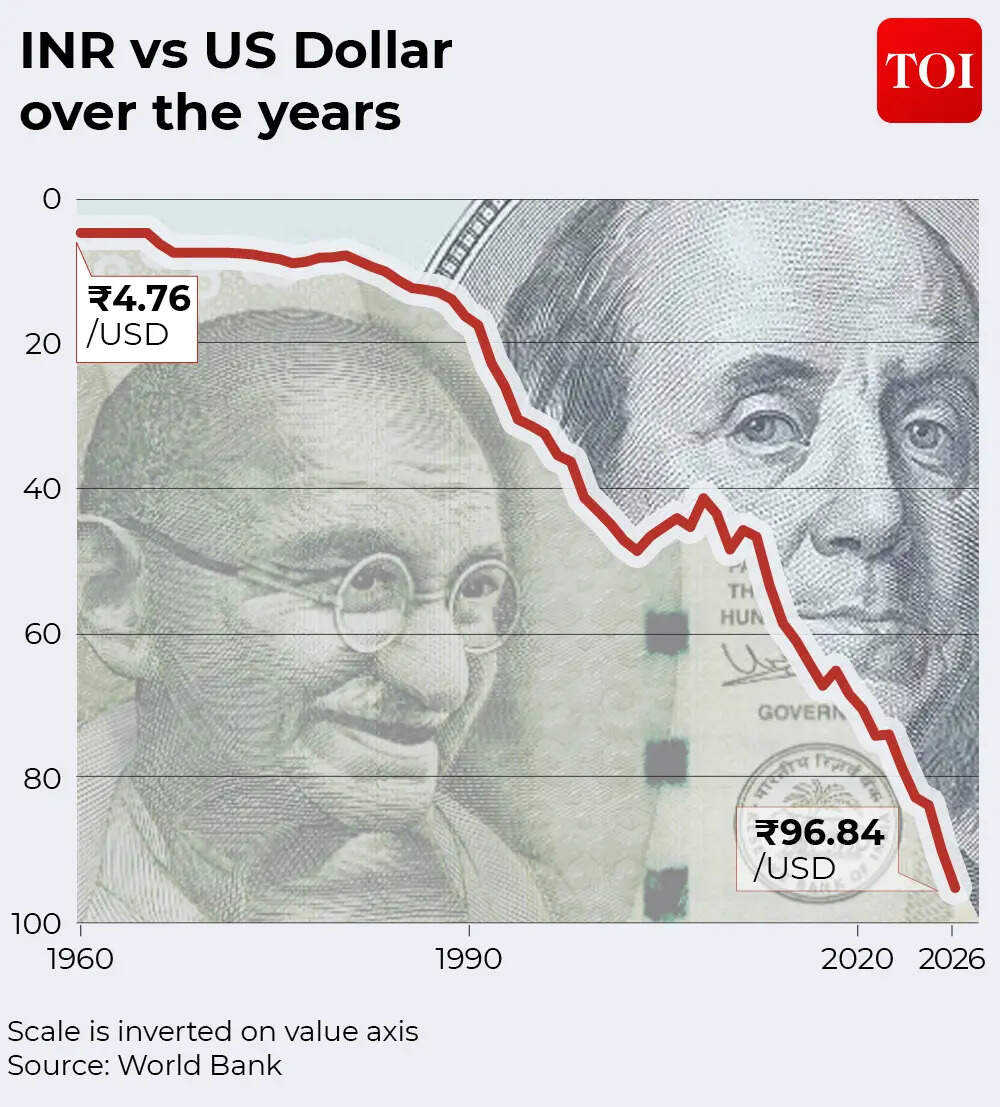
Experts believe that the impressive growth performance would experience a short-term setback in terms of a fall in GDP growth in 2026-27 driven largely by exogenous factors particularly in relation to the West Asian crisis and various supply bottlenecks and price shocks affecting sectors like crude oil, gas and fertilizers.“India’s growth performance in 2026-27 will depend largely on a speedy normalization of global crude supply and prices. Even if 2026-27 growth clocks in the range 6.5 to 6.6%, India would be an impressive contributor to global growth,” Srivastava says.Ranen Banerjee of PwC points out that while the fourth quarter has been seemingly unimpacted, the impacts of Middle East conflict that began in March would possibly be seen from Q1 of FY27.Also Read | Keeping India’s growth story intact: 5 lessons from Middle East conflict that should not be ignored“The downside risks and the impacts of the conflict and higher commodity prices are likely to manifest in higher inflation prints in coming quarters as outlined by the RBI too. This will have a sobering effect on household discretionary spending and hence will put pressure on private consumption that in turn will have an impact on investments by the private sector for capacity addition,” he predicts.The agricultural sector has contributed to the GDP growth with healthy 3% plus growth rates over the last couple of years. With uncertainty around the monsoons, there could be downside risks to growth in the agricultural sector and if this risk is realised, it would feed into inflation as well as cause further headwinds to growth through rural consumption weakness, he says.“This risk is however mitigated to an extent as the reservoir storage levels are quite healthy and can compensate for some shortfall in rains as long as the distribution of rainfall is not very skewed,” Banerjee adds.
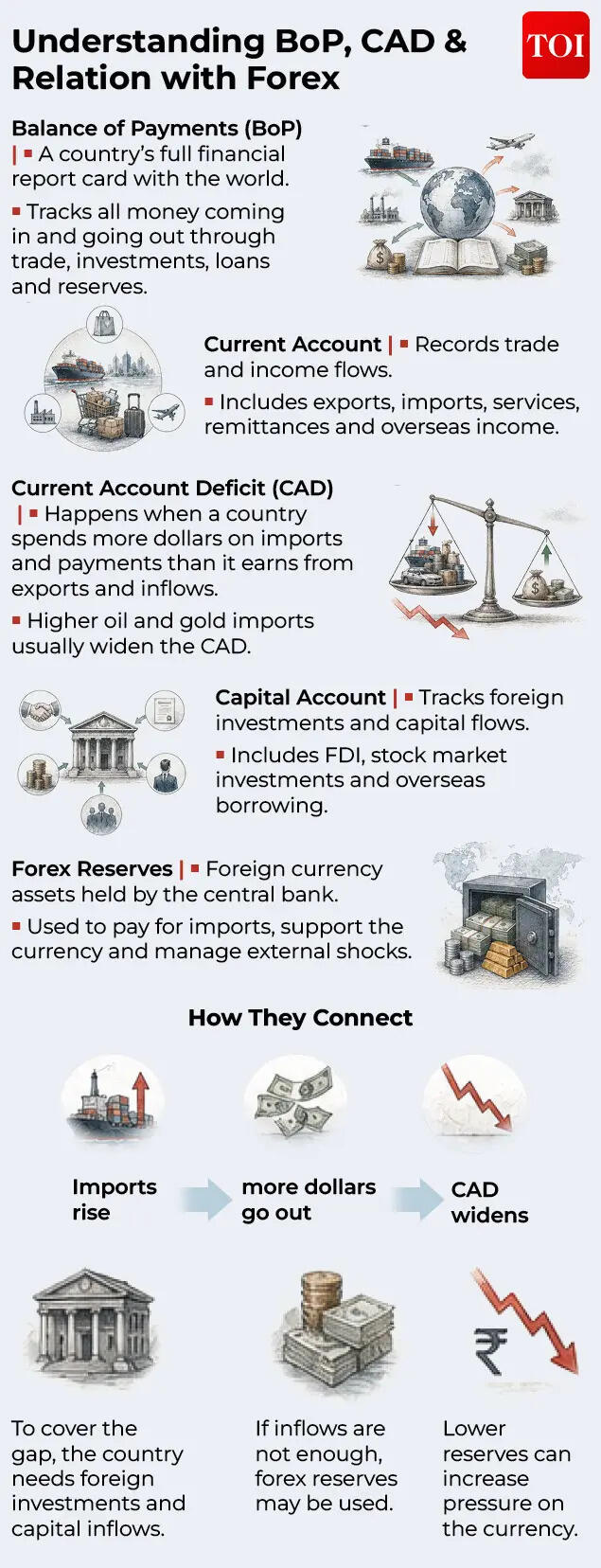
The adverse impact of the US-Iran conflict is likely to be reflected through pressure on producer margins, production adjustments across sectors, and the pass-through of higher retail fuel prices and associated second-round inflationary effects on consumption. “These risks are further compounded by the projection of a below normal outcome of Southwest monsoon by the IMD – which has adverse implications for food prices as well as rural demand,” says Yuvika Singhal.“Reflecting these risks, FY27 GDP growth expectations have been revised downward to 6.2%, while CPI inflation is projected to rise to 5.5% by QuantEco Research. Our call is based on global crude oil averaging in the range of $90-95 pb in FY27,” she adds.
India’s resilience to help it tide over situation?
Chief Economic Advisor V Anantha Nageswaran has expressed confidence in India’s growth trajectory, calling the ongoing conflict a temporary setback.“We have no reason to second-guess them (RBI forecast) at this point, because there are both possibilities on the upside and on the downside with respect to the numbers that they have presented,” he said. “So, even if the growth were to slip below 7 per cent as the RBI forecast suggests…macro stability measures and supply assurances will bring us back to a 7% plus growth track in FY28 or as soon as external conditions improve,” he added.DK Srivastava of EY India points out: The OECD, in its outlook has projected India’s economic growth at 6.3% for 2026-27 which is more than double the projected global growth of 2.8% under the limited time disruption scenario and 2.1% in the prolonged disruption scenario. Contextualizing India’s growth at 6.3% as per the OECD and global growth in the range of 2.1% to 2.8% highlights India’s underlying resilience to exogenously generated shocks.Also Read | Why did Taiwan, South Korea overtake India? Drop from 5th to 7th largest stock market – explained in 10 charts “Going forward, India would do well to minimise the impact of global shocks affecting supplies and prices with respect to critical commodities such as crude oil, gas and fertilizers by building strategic reserves for these commodities,” he adds.As RBI governor Sanjay Malhotra said today: “The Indian economy entered this episode of global turbulence with much better fundamentals than in previous similar episodes. While we remain confident to withstand these shocks with minimum pain, it is important to not only confront and address these challenges but also take them as an opportunity to further enhance resilience.”