










Summer nurseries have a natural advantage. With longer days, generous light and a warmth that fills the room from morning to evening, a summer baby’s space already has a head start but choosing the right paint colour can make all the difference between a room that feels alive and one that just looks nice. Colour affects far more than aesthetics; it shapes how a space feels to be in, how a baby responds to their surroundings and how calm or stimulating the environment becomes at different times of day.Read on as we walk you through some top recommendations, from the ideal primary colour to the finishing touches, that make a summer nursery feel truly complete.
The best colour for a summer nursery
To help parents get it right, Dr Eleni Nicolaou, Art Therapist and Creative Wellness Expert at Davincified, a US-based premium custom paint-by-numbers platform known for its relaxing, therapeutic approach to art, shares her guidance on the best colour choices for a summer nursery, along with the complementary shades and practical tips to bring the whole room together.
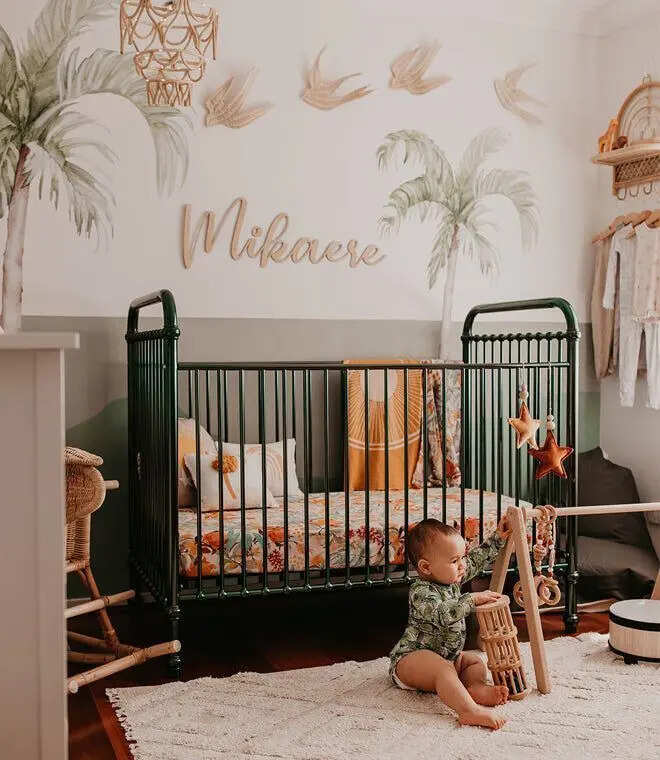
An art therapist reveals the best colour to paint a summer nursery, explaining how the right shade can shape a baby’s comfort, mood and perception of the space.
When it comes to summer nurseries, Dr Nicolaou’s top recommendation is soft pastel yellow. In an interview with the Times of India, she shared, “Soft pastel yellow is my first choice for a summer nursery. It mirrors the warmth and brightness of the season without overwhelming a baby’s developing senses. It’s a colour that feels naturally joyful and that emotional quality is important in a space where a child spends so much of their early life.”From an art therapy perspective, yellow is strongly associated with warmth, optimism and gentle stimulation. In a room that already benefits from strong natural light, a soft, muted yellow works with that light rather than competing with it, reflecting it back into the space and keeping the room feeling airy and open throughout the day. Unlike bolder or deeper shades, pastel yellow maintains its softness even as the light shifts from morning to evening, which means the nursery stays comfortable and consistent for the baby.Soft, warm-toned colour environments combined with natural light exposure were associated with improved sleep onset and reduced agitation in infants. According to a 2024 scoping review in the European Journal of Pediatrics, natural light exposure improves sleep-wake patterns, daytime wakefulness and nighttime sleep consolidation in infants.
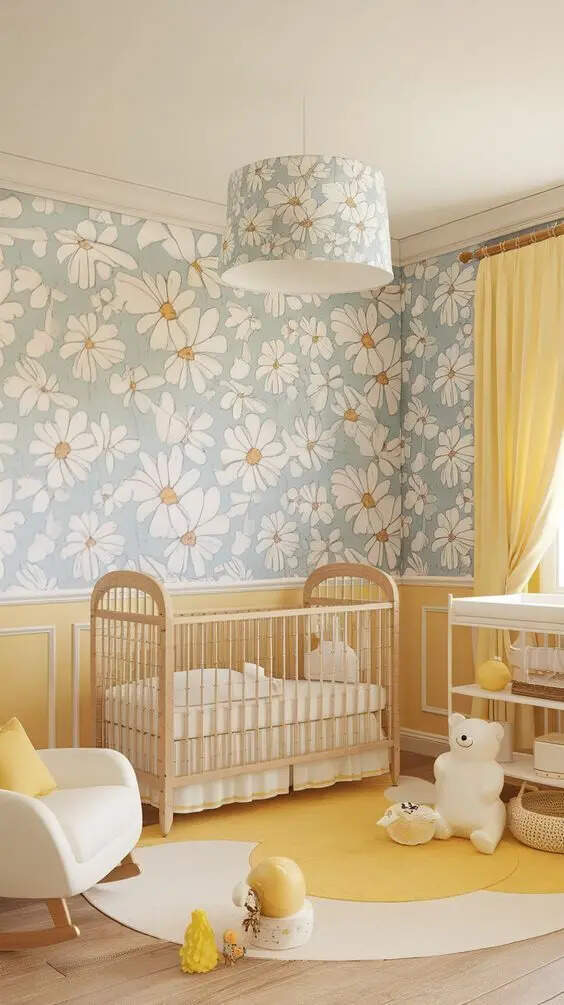
Is Pastel Yellow the ONLY Way to Paint Your Summer Nursery? Experts Weigh In
It emphasises dim, low-intensity nighttime conditions mimicking natural dark (e.g., incubator covers reducing to 1.45 lx) that enhance deep sleep and reduce disruptions, aligning with reduced agitation. Daytime natural or higher light promotes entrainment, supporting faster sleep onset via better rhythm alignment.Be mindful of the saturation level. A pastel or chalky yellow is very different from a bright, saturated one. The softer the tone, the more calming the effect, which is exactly what a nursery needs.
Complementary colours for a summer nursery
Once the primary colour is chosen, the supporting palette is what brings the room together. Experts suggest three complementary shades that work beautifully alongside soft pastel yellow:
- Cream or Off-White: “Cream is the perfect partner for pastel yellow,” Dr Nicolaou explained. “It softens the overall look, adds a sense of cleanliness and space, and stops the room from feeling too themed or sugary.” Cream works well on woodwork, skirting boards, ceilings and furniture, grounding the yellow without dulling it.
- Soft Peach or Blush: For parents who want to introduce a sense of warmth without moving too far from a neutral palette, soft peach or blush is an excellent choice. These tones sit comfortably beside yellow, adding depth and a gentle cosiness to the space. “Introduce soft peach or blush through textiles, such as curtains, blankets and cushions, where the colour can be introduced lightly without committing to a full wall,” advised Dr Nicolaou.
- Light Sky Blue: Sky blue can be used as a wall accent, on a feature shelf, or through smaller decor pieces to keep the effect subtle. “A touch of sky blue acts as a calm contrast,” said Dr Nicolaou. “Where yellow brings energy and warmth, blue introduces a cooling balance. Together, they echo the feeling of a bright summer day, which is a soothing combination for
babies and parents.”
A 2015 review in Behavioural Brain Research detailed how newborn infants’ visual attention is reflexively drawn to high-contrast, salient features, with immature scanning in complex settings leading to longer looks and less efficient processing. By 3-6 months, voluntary control emerges in simpler environments, allowing better focus on relevant features and regulated responses, while high visual complexity overwhelms early systems.
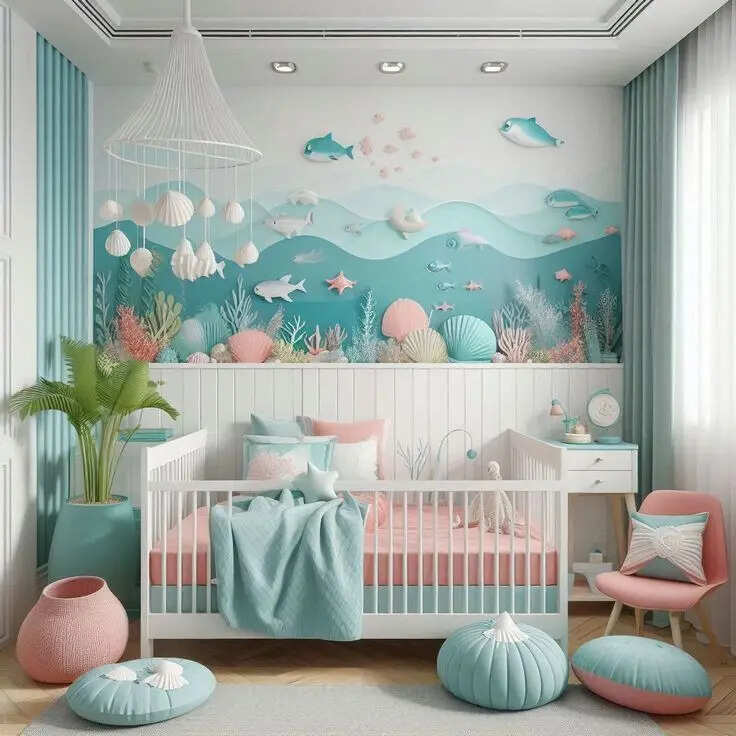
Complementary colours to pair with the primary shade, from cream and blush to soft sky blue, with practical tips on how to use them across walls, furniture and textiles of nursery.
Low-saturation, balanced visuals support this development by reducing reflexive overload, aligning with regulated sensory processing over complex or saturated stimuli. Infant visual preferences favour high-contrast and complex patterns early on (e.g., 2-month-olds show category-selective responses) but overwhelming complexity or saturation can dysregulate attention in preterm or sensitive infants, supporting muted tones for nurseries. Guidelines recommend low-stimulation, balanced sensory environments to promote regulation, avoiding high visual clutter.
Tips for a summer-friendly nursery
Dr Nicolaou also shared some tips to make a nursery look spectacular –
- Choose Light-Reflective Paint Finishes: The finish of the paint matters as much as the colour itself. A soft sheen or eggshell finish will reflect natural light more effectively than a flat matt, helping to keep the room bright without the need for additional artificial lighting during the day.
- Keep Textiles Light and Breathable: Summer nurseries can warm up quickly, so the fabrics in the room need as much thought as the walls. Opt for lightweight cotton and muslin in the complementary shades rather than heavy or synthetic materials. These keep the space feeling fresh and comfortable for a baby who may be sensitive to heat.
- Keep Decor Minimal: A nursery doesn’t need a load of additional decor to make it aesthetic. “A calm environment supports a calm baby,” Dr. Nicolaou noted. “Resist the temptation to fill every surface. A few considered pieces, in colours that complement the palette, will always feel more intentional and more restful than a busy, cluttered space.”
Colour is a great tool available to parents when designing a nursery yet it is often treated as an afterthought. For a summer baby, the goal is to work with the season’s natural generosity of light and warmth rather than fight it. Dr Eleni Nicolaou concluded with the advice, “Soft, cheerful shades like pastel yellow, paired with calming accents of cream, blush and sky blue, create an environment that feels bright without being overwhelming. Babies are highly sensitive to their surroundings and a thoughtfully coloured room can support their comfort and sense of calm. My advice is to choose colours that make you feel at ease when you walk in, because if the room feels peaceful to you, it will feel peaceful to your baby too.”